
What’s a MacGuffin?
It's a thing with wings

ONE OF THE BEST THINGS YOU WILL EVER READ ON THIS SITE!!
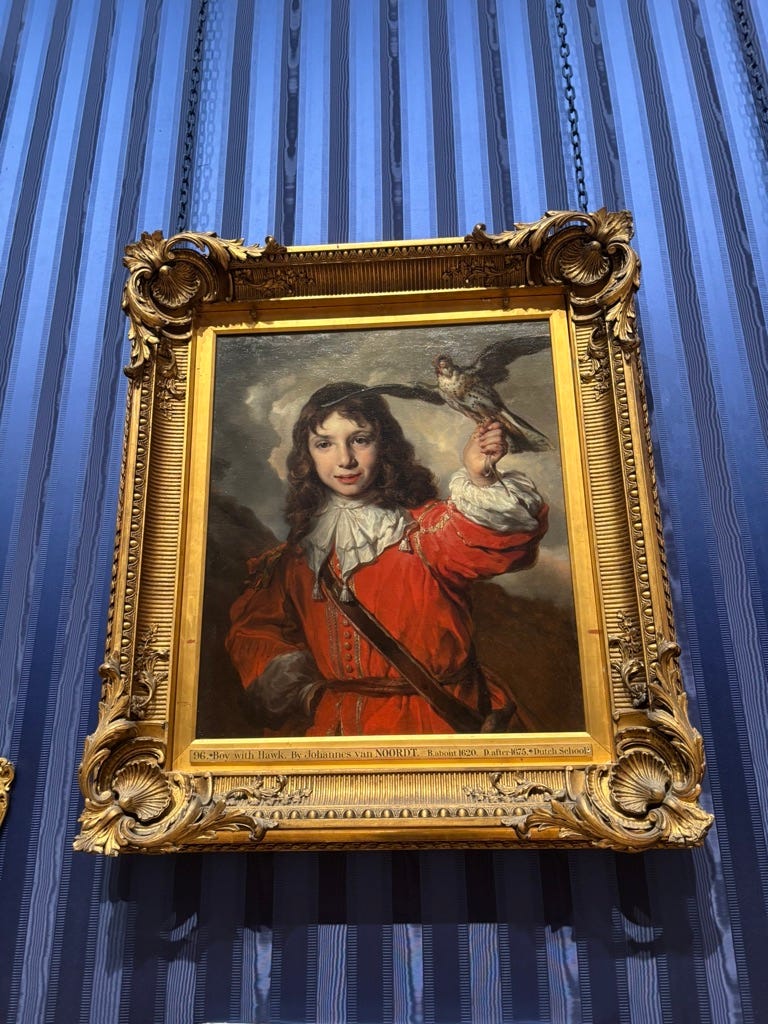
‘On their arrival at the castle they learned that Buckingham and the king were hawking in the marshes two or three leagues away.’
Dumas
A MacGuffin is an object, device, or event that is necessary to the plot and the motivation of the characters in a story.
By the mid-point of her adventures, I felt Milady needed some extra motivation. The first book, Unfurling, about her coming of age, focused on her relationships with her birthmother, the Holy Mother of God, and the Mother Prioress; a trinity of mothers. The love she bore for her sister and the role she played as go-between with Maynard acted as driver for the story.
I don’t want to spill spoilers, but nevertheless, I felt the story engine for the second half of Anne/Charlotte’s life did not pack enough punch and needed a MacGuffin. Over my years of reading and writing, I understood the perfect example of a MacGuffin to be the titular ‘The Maltese Falcon’ (now in public domain FYI) so off I trotted to the library to borrow Dashie’s book to learn my lesson. And what I found amused me. I could hear Sexy Lexy chuckling along with me. Ooh la la!
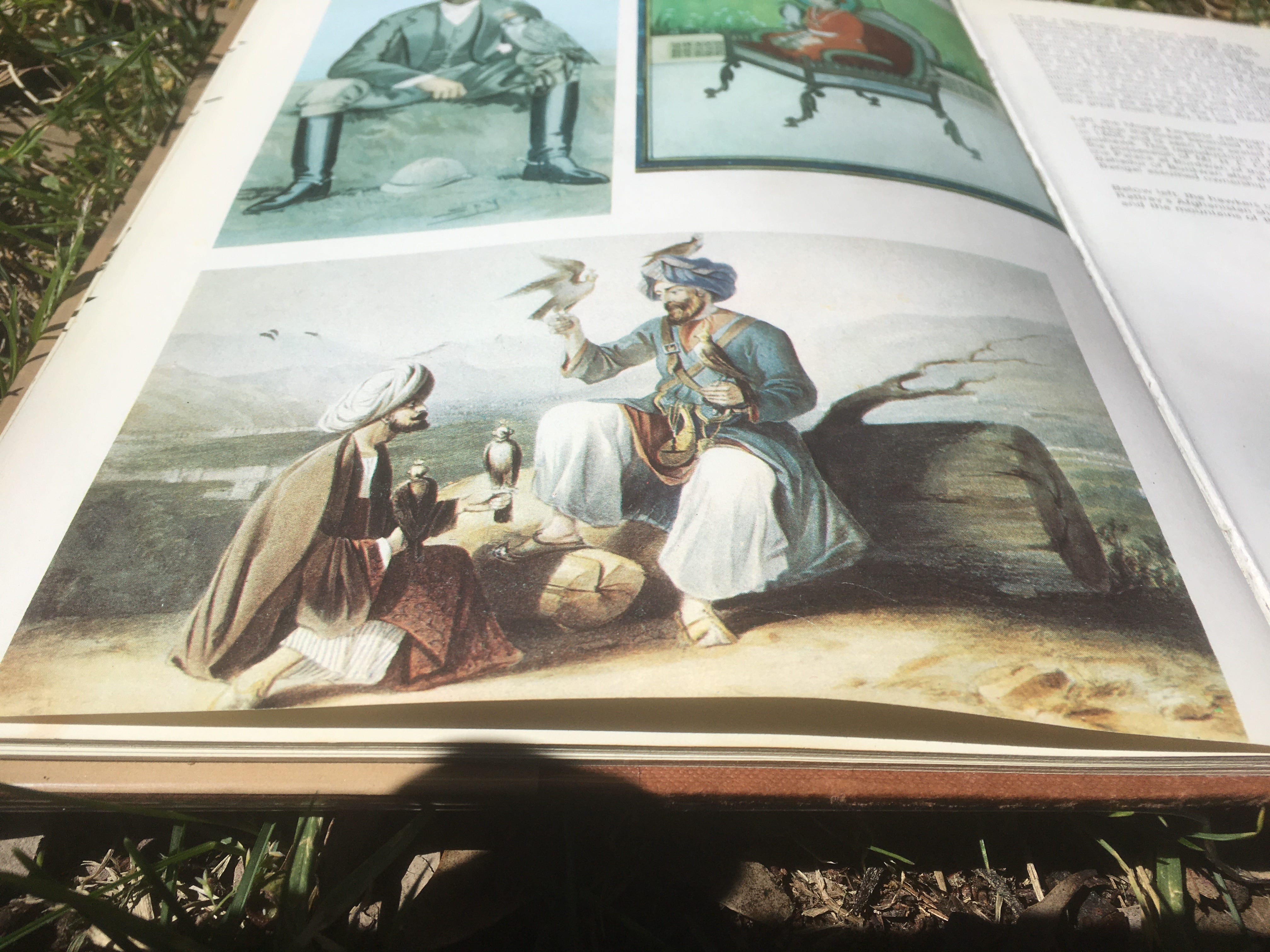
Hammett described a glorious golden falcon encrusted head to foot with the finest jewels. It was a foot-high bird made by Turkish slaves in the castle of St Angelo, the home base of the Order of the Hospital of St John of Jerusalem. Charles V, as Emperor of Sicily, was the landlord of the Knights Hospitaller and the rent was a tribute of a falcon to be paid on All Saints Day, the first of November, every year.
You might think a bird wasn’t much rent for a castle, but good falcons were as valuable as racing cars and equally as fascinating as the latest Ferrari to a bold young warrior. Perhaps the golden statue would have been an additional tribute to a live bird, perhaps they were running late in payments, or felt their relationship with the Emperor needed little something weightier.
However it happened, the Maltese Falcon was addressed and sent to Charles V, but, shockingly, it was stolen by Algerian pirates en route.
Dasheil Hammett suggested the statue was taken by the English pirate, Sir Francis Verney. The effigy was lost until Victor Amadeus II gave the falcon to his wife in 1713. Victor was the Duke of Savoy from 1675 to 1730 and lived in Sardinia when he wasn’t in France.
Sir Francis Verney was known to operate around the Barbary Coast, around North Africa, Morocco, and Tripoli, Algiers and Tunis between 1607 to 1610. One of Verney’s more famous exploits was the capture of a merchant vessel carrying a shipment of French wine for King James I. James was so angry about Verney’s theft that he assigned a ship-of-war to escort future ships carrying his wine. Clearly wine did arrive at court because King James and his drunken parties are renowned.
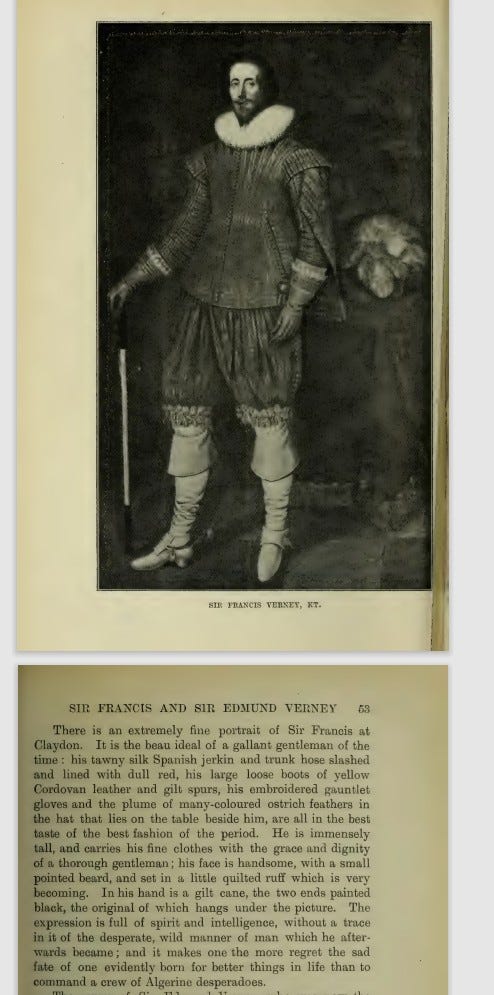
In my account, the Comte de Rochefort lists Sir Frances Verney among the most dangerous English pirates, together with Il Drago (Drake), Walter Raleigh and Le Cyclope (Lord Clarik). (One of these is fictional.)
In 1608 the very real Verney visited Paris, probably en route to England to settle up his affairs. His father having died, he needed to see if there was anything he could make of the estate. There wasn’t.
Let’s suppose Sir Francis needed to use the falcon in the English embassy to make some cash. This ‘pawning’ of the statue would surely raise enough funds to see him through England.
Sir George Carew would have been there in 1608. I’m sure Sir George was an obliging fellow countryman, offering succour to a well-connected, knighted Englishman even if he was an adventurer/pirate. Verney may have intended to retrieve the falcon when he was flush but, as his inheritance proved disappointing, and his pirating unpredictable, he never showed up, and the Maltese Falcon stayed in Paris, gathering dust in the English Embassy. (Let us suppose.)
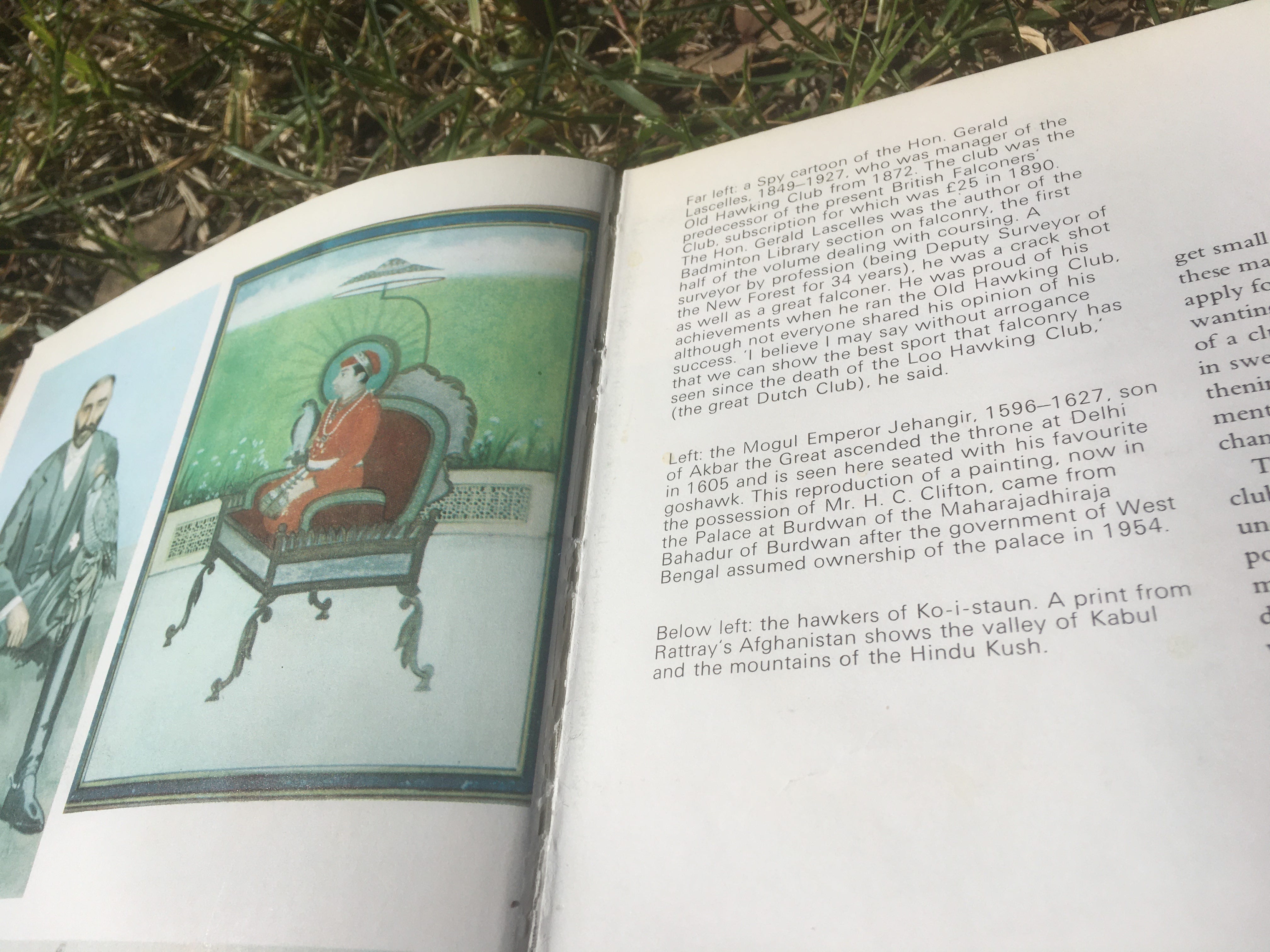
By-the-by, in 1610 Verney converted to Islam and, after that, spent two years trapped on the Sicilian slave galleys. Luckily, in 1614, he was rescued by a Jesuit, Sir Robert Chamberlain, became a Catholic, and went to Sicily to die in 1615.
Verney’s effects were eventually taken to Claydon House, which was not built until 1620. Inventories of those items list no mention of a foot-high, golden falcon statue.
Between 1610 and 1617, Thomas Edmondes was the residential ambassador to France. However, Sir James Hay, as visiting ambassador, was sent to Paris in 1616 to negotiate the marriage of the French Princess Christina with the English Prince Charles. (Interestingly, Sir James was married to Lucy, Dumas’s inspiration for the character of Milady). His stay in Paris was prolonged by Buckingham - just so he would be out of the way so naughty George Villliers could extend his London affair with Lucy!)
Perhaps, as they discussed the impending negotiations in the Paris Embassy, Edmondes and Hay would probably have thought to sweeten the deal with some pretty toy. The English court was broke, without any wherewithal to provide an impressive present, and knowing the King of France to be fond of falconry, and jewels, what better gift than a bejewelled gold falcon statue? They may have found it, perhaps on display in the English Embassy, perhaps as an oversized paperweight cluttering up Edmondes’s desk, and realised it was perfect for the job.
We may suppose the gift was well received by the young King and often admired in the Louvre. The marriage negotiations went nowhere, and James began to negotiate with Spain for the Infanta but that’s another (ridiculous!) story.
In 1616, when the King of France promoted his mentor and friend, Charles d’Albert Luynes, to the exalted station of the Grand Falconer of France, Louis would have given him the sculpture in celebration of his new office. Of course! Why not?
During the summers between 1615 and 1617, the King and his entourage often toured Berry, near Amboise, and they certainly visited their old hunting buddy, Olivier, the Comte de la Fère, at the Chateau de Fère, as keen readers know.
In my account of Milady’s early marriage in 1617, Charles d’Albert Luynes trains Charlotte in the use of a Lanner falcon given to her by the King. Amidst the talk of falconry, Lunyes, entranced by the idea of marriage, discusses love and weddings. Because the next thing that happens in 1617 is that Lunyes marries Marie de Rohan. You will remember Marie Rohan as Madame de Chevreuse, Athos’s lover in ‘The Three Musketeers’.
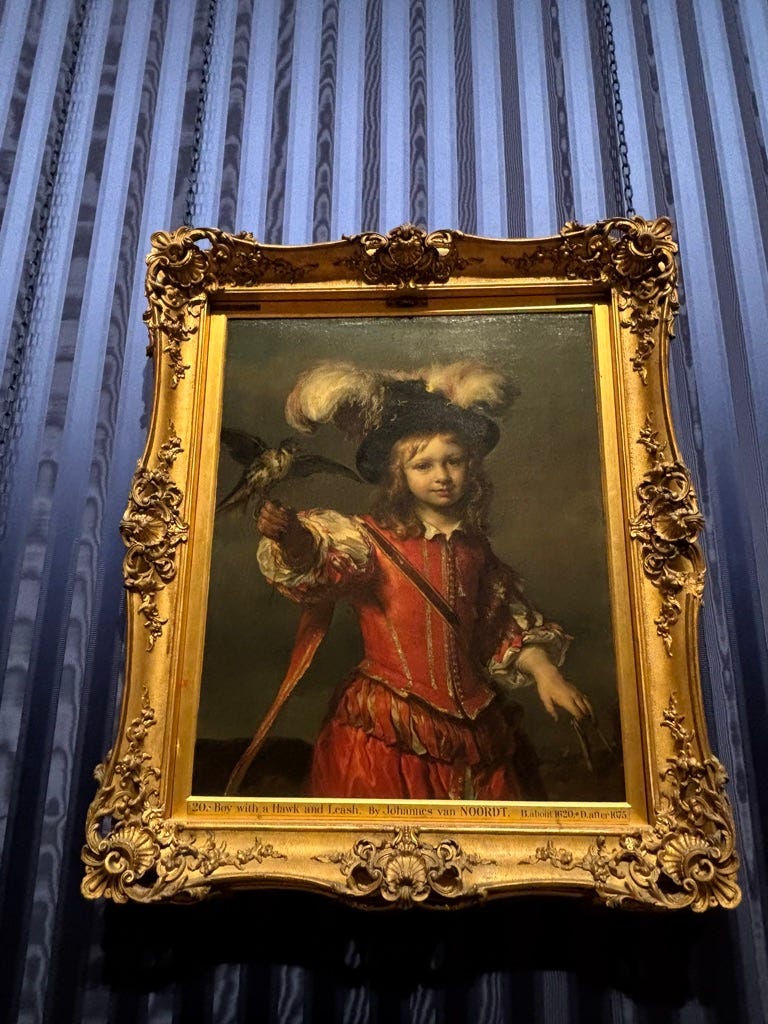
In 1619, Louis XIII made Charles the Duke of Luynes and a Peer of France. The very next year, in 1620, Lunyes has a son and heir, Louis Charles. There are grand celebrations at Caen.
It was at this point, the falcon was probably stolen from Caen and fell into Clarik’s nasty piratey Le Cyclope paws. Lord Clarik gathers the golden sculpt into his loot and carries it away to the North of England.
Sadly, Luynes dies in 1621. (There was no sign of the falcon in his effects.)
BUT!
His ambitious widow Marie married the Duke of Chevreuse in 1622. She became Madame de Chevreuse, the dear friend of the Queen, Anne of Austria. Due to the naughty influence of Marie de Rohan, Anne of Austria became far too flirty, free and easy, making her an easy conquest for the then Marquis of Buckingham, our old chum, George Villiers.
Things happen in my account which I won’t spoil, suffice to say the falcon finds its way to the Louvre (can you guess how?) and the desk of King Louis XIII. Perhaps, for a sentimental King, looking at the falcon made him dwell on uncomfortably wistful memories of his dead, beloved, favourite falconer and father figure, Lunyes. So, he wanted it out of the Louvre. You agree with me that Louis probably presented the statue to Madame de Chevreuse for her son, Louis Charles?
And get this, for real, Louis Charles, as the second Duke of Luynes, eventually married his mother’s sister, Anne de Rohan. (HIS AUNTY!!)
Then, in her turn, his daughter, Jeanne Baptiste, simultaneously Marie’s granddaughter and niece, became the mistress of Victor Amadeus II of Sardinia and ancestress of the Savoy kings of Italy! I mean, did Dashiell Hammett know this?
THEREFORE
The daughter must have given the falcon to her lover! What a beautiful sparkly gift.
That is where Dashiel Hammet leaves the falcon’s history. Safe and sound in Sardinia. Until he needed a Macguffin!
Please note this background falcon story is not detailed in the pages of the Milady account. But don’t you think it would amuse Sexy Lexy?
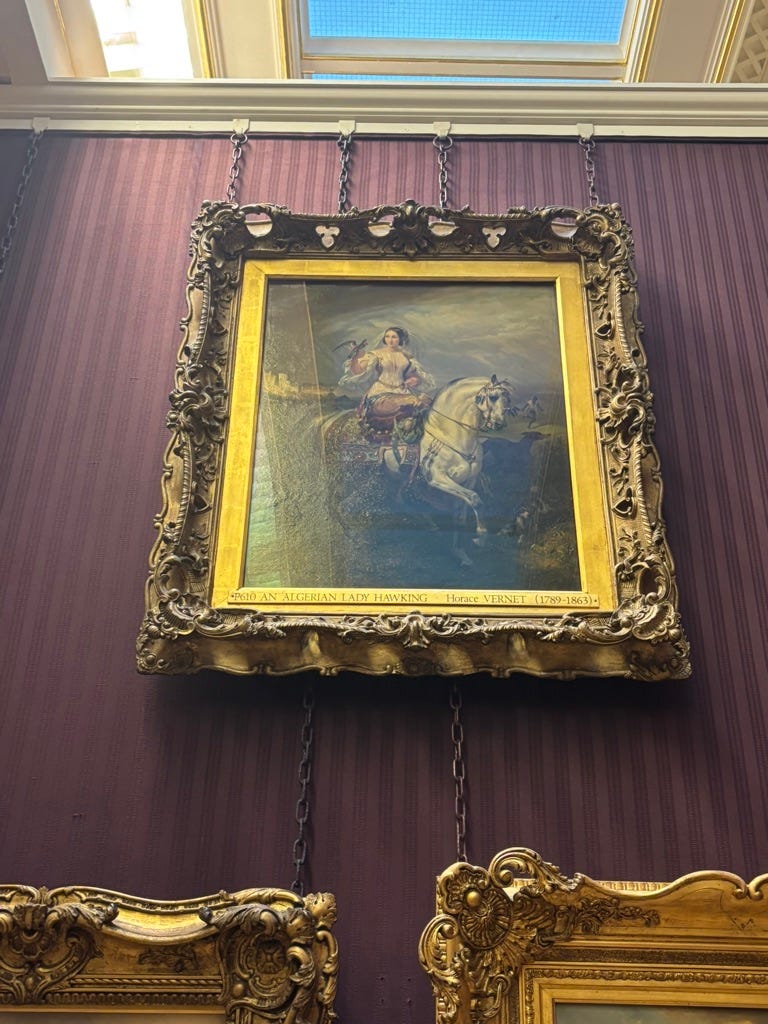
By the by, do you want to see what one of the black Maltese Falcon movie props sold for in 2013? Please click here to see a number such as dreams are made of!!
Don’t you think Dumas would approve? Isn’t this is one of The Best?