
Templemars
You say Templemar, I say Templemars, let's work the whole thing out ...

“That woman was once a young girl, as beautiful as she is today. She was a nun in the convent of the Benedictines of Templemar.”
Dumas
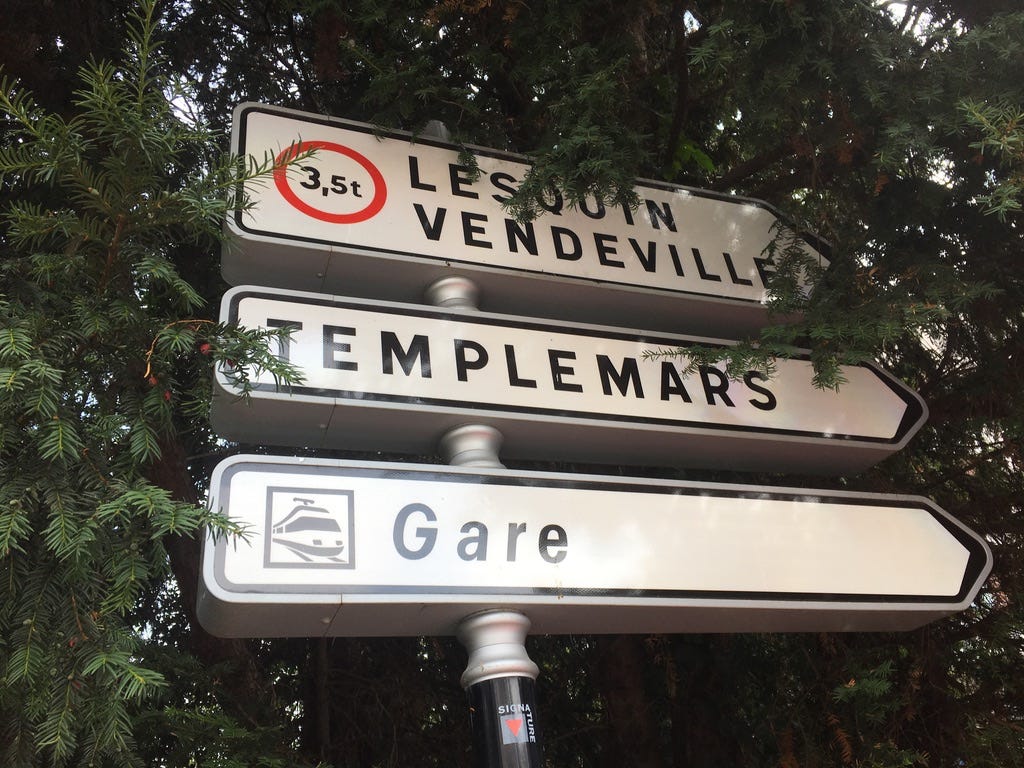
On my first researching summer, I did not get to Templemars, to which I assume Dumas referred as Templemar, as I had limited budget, and time. So, while living in Asturias, Spain, I began to shape my account of Milady’s life while reflecting on previous trips, and soon realised it would be necessary to make another research trip, not just to inspect Templemar(s) but also to visit a bunch of historical edifices in England. I was still SO ignorant!
Due to intervening wars, it had been difficult to discover historical anything much in the North of France. Who is to say for sure what was there four hundred years ago? Therefore, I have to admit I made up the Priory of Saint Scholastica from whence Anne fled as she was about to profess her final vows. I based the shape of the convent mainly on Our Lady of Hambye Abbey, which was founded by Benedictines. The atmosphere and wood panelling of the Prioress’s office was influenced by the Musée de l’Hospice Comtesse in Lille. Finally, the notion of the wall jumping the stream is from the Cistercian Abbaye Auberive in Champagne where there was an extensive orchard with heritage apples. The one I tried was a little sour, I must say. Perhaps it was used for cooking appleflappen.
But what if there was a Priory there? What if I had overstepped the mark? I had to check. I managed to get to Templemars the next summer, on Tuesday 28th August 2018, travelling from Kortrijk, over the border in Belgium. (You’ll find out what I was doing there soon enough!)
I caught the train to Lille where there was an info office in the station with someone who spoke English. I liked Lille. The colourful buildings overlooking the station, the friendly people, and the ease of navigation around the town. And there was that sculpture with the cube stuck on some horrid old rich guy. At the station, I was directed to the right queue and remembered enough French to ask for a return ticket and she managed to explain how to pay and how to validate the ticket and I managed to demonstrate, with interpretive dance, that I understood. It was only one stop.
It turned out Templemars was a small, quiet town. Very quiet. Everything shut for lunch. Everything. I worried about finding a toilet. C’est la vie. I found one at the service station. When interrogated, the doubtful young homme on duty shook his head about questions of history or tourist information. He told me I could enquire at the Council office. After lunch. Hours away.
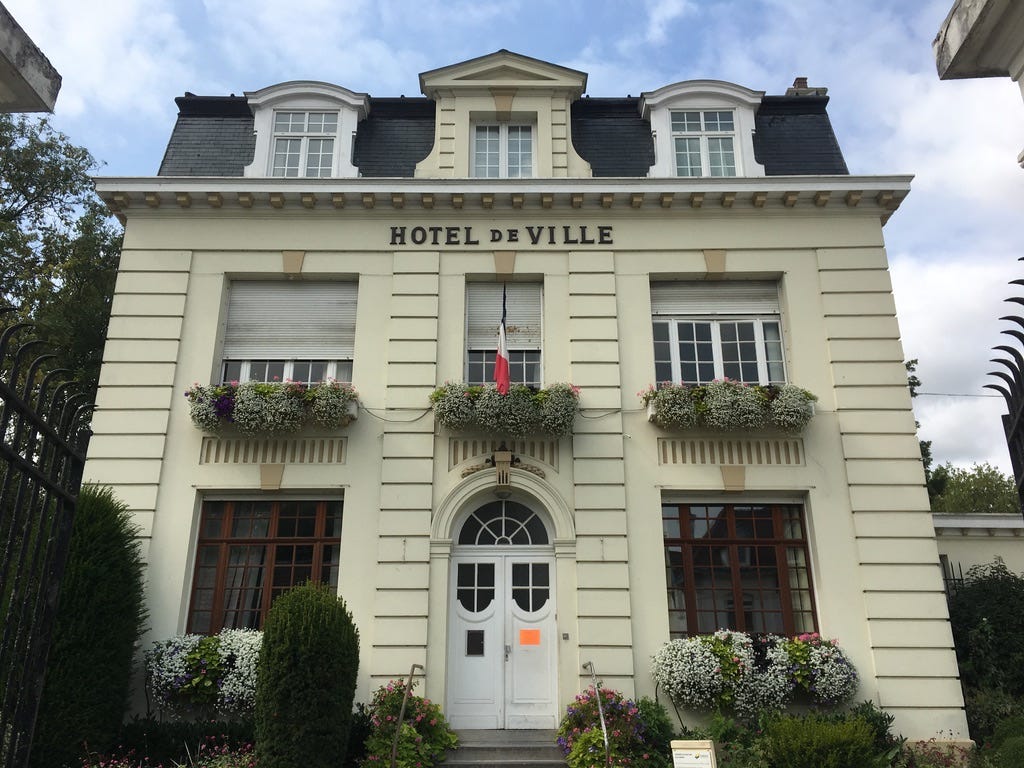
So I wandered about the town. It was warm. I grew hungry and weary. Where was I? Was there a Benedictine Convent? Any convent? A monastery? How about a church?
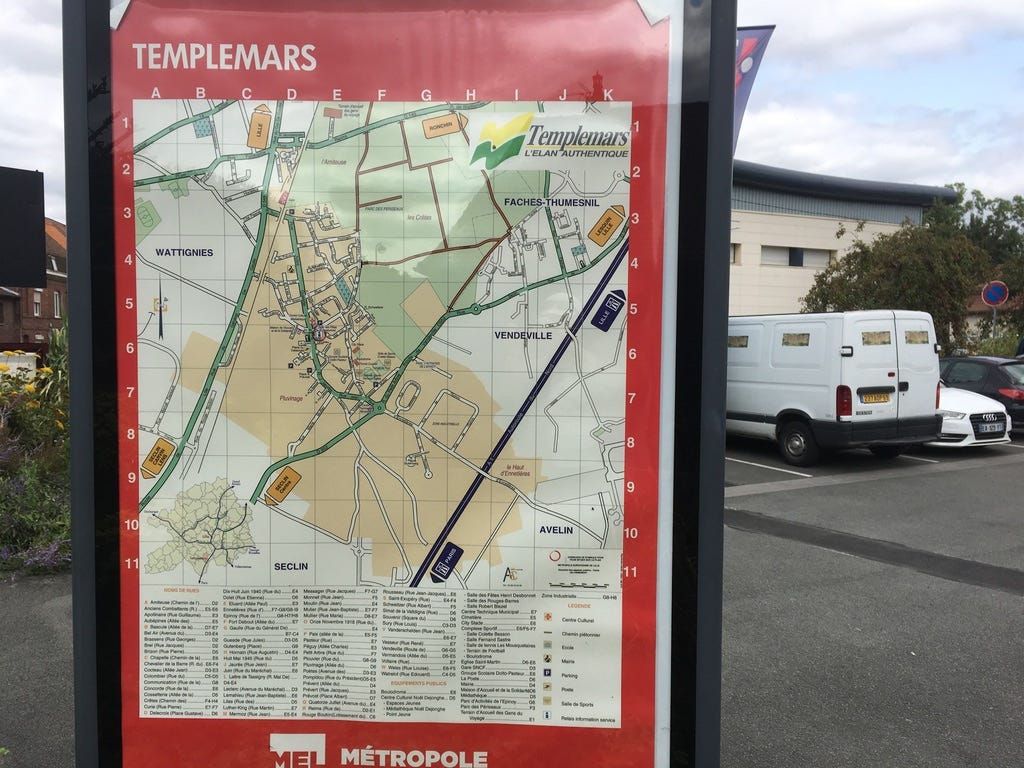
I found the graveyard which, disconcertingly, had no church. I ate my sandwiches and fruit amidst the crosses and cement and faded plastic flowers. A nice symmetry (cemetery?) to the place where I first heard Anne calling me. Names from the graveyard were all last century but local so: Etienne (b. 1902), Victoire, Georges, Marcelle, Melanie, Aimable (1899), Aridrea, Elyane, Clementine, Arlette, Camille, Julie, Antoine, Desire, Bernard, René, Edouard, Lucien, Daniel, Jaques ... I didn’t note surnames for they wouldn’t have been in use in 1610. I suspect the old graveyard and church was destroyed in one of the wars. Or both.
The village church, with its controlled block of lime trees, did not look old to me, a layer cake of brick, with striped grey and white stone through the bricks.
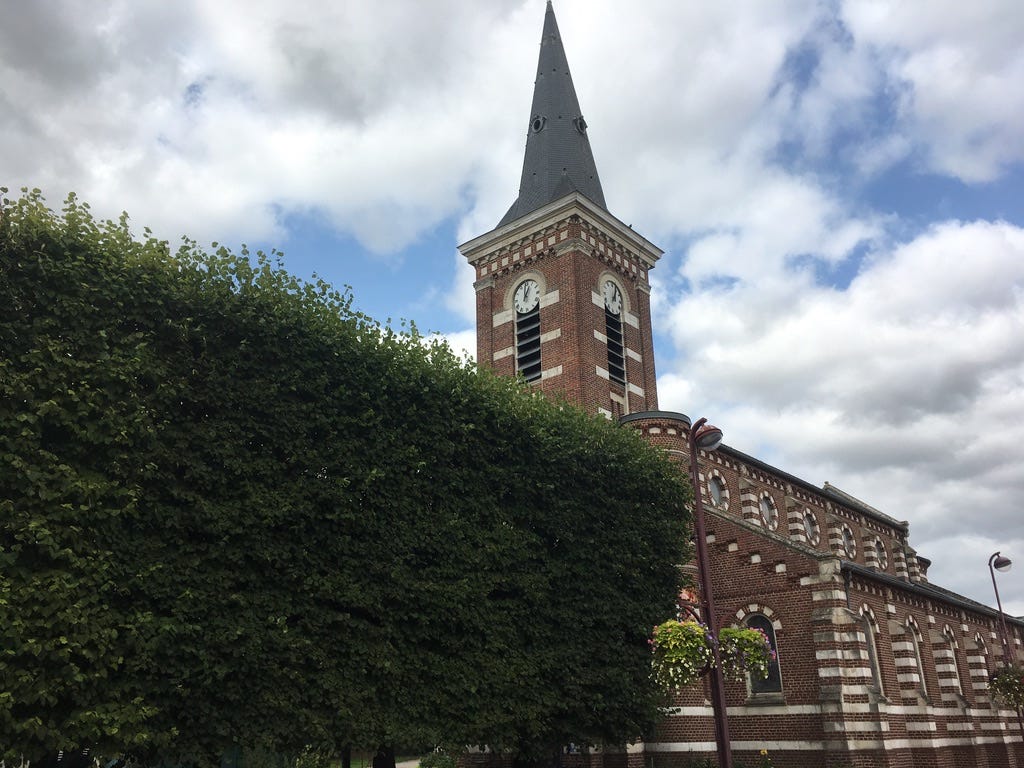
Many apparently older buildings had this pattern. I was not sure if it was chalk or limestone but it was unlike any other pattern I’d seen used in buildings in the north of France. The brickwork was like weaving or knitting.
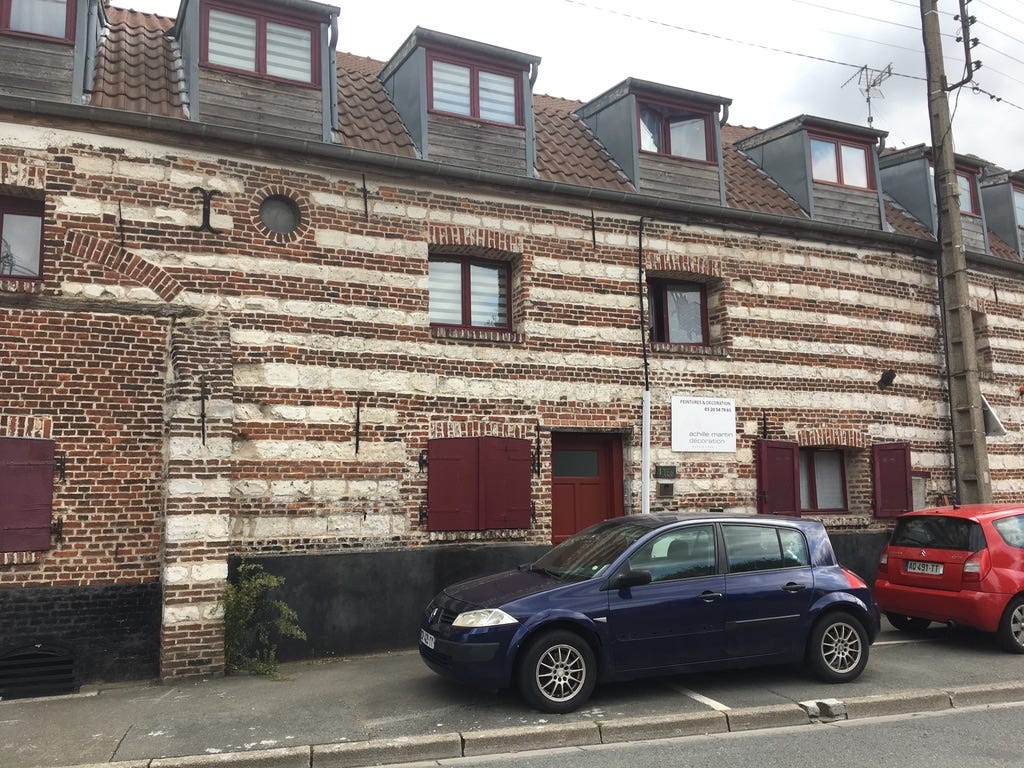
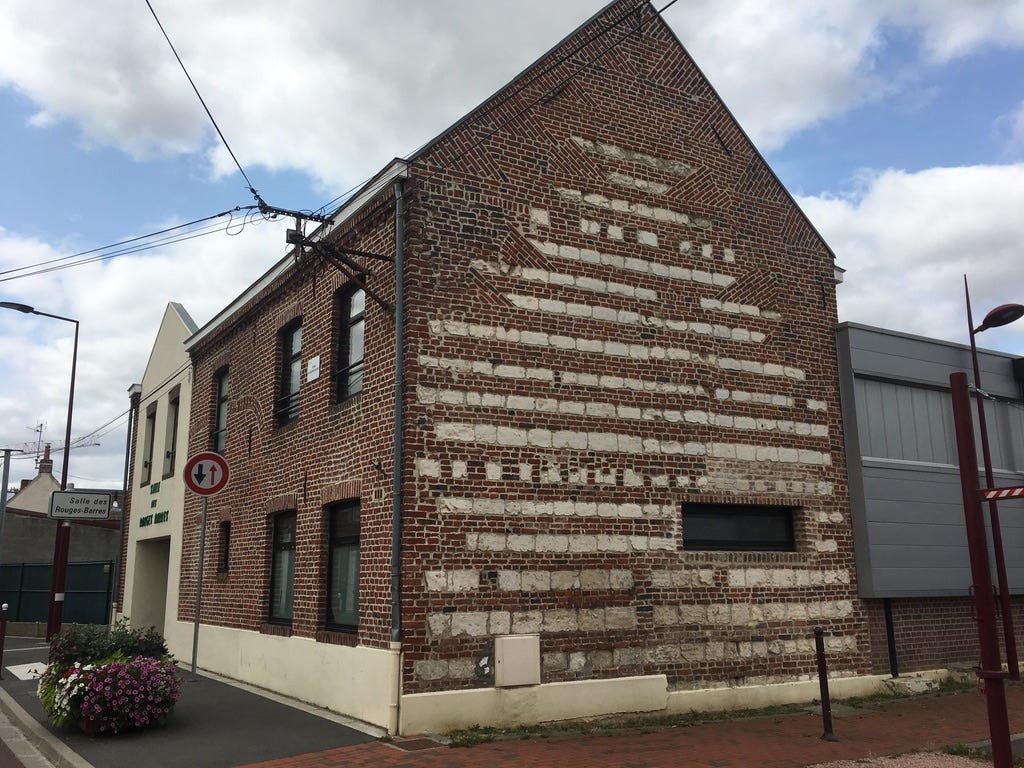
Templemars was very close to Lille. Easy walk if you had all day and Anne would have all the time required when she was ready to leave. After reading ‘A Little Life’ by Hanya Yanagihara, I grew concerned about tormenting Anne too much. I didn’t think the nuns needed to be all bad. Anne gained an education; she could read and write, and she’s adept with yarn - both wool and linen - spinning and weaving - and wily enough to keep her major asset - perhaps her mum puts her wise - not necessarily in a good way - otherwise Athos would kill her on the wedding night. And if he says she was innocent then I believed him. I didn’t think Sexy Lexy would approve of too much adult content. He blurred details in his most salacious moments.
Milady must be, first and foremost, engaging, not sick making. ‘A Little Life’ flipped that for me as it was relentless. It was difficult to imagine a happy ending. None of the four pretty men we meet at the start follow Shakespeare’s exhortation to be fathers.
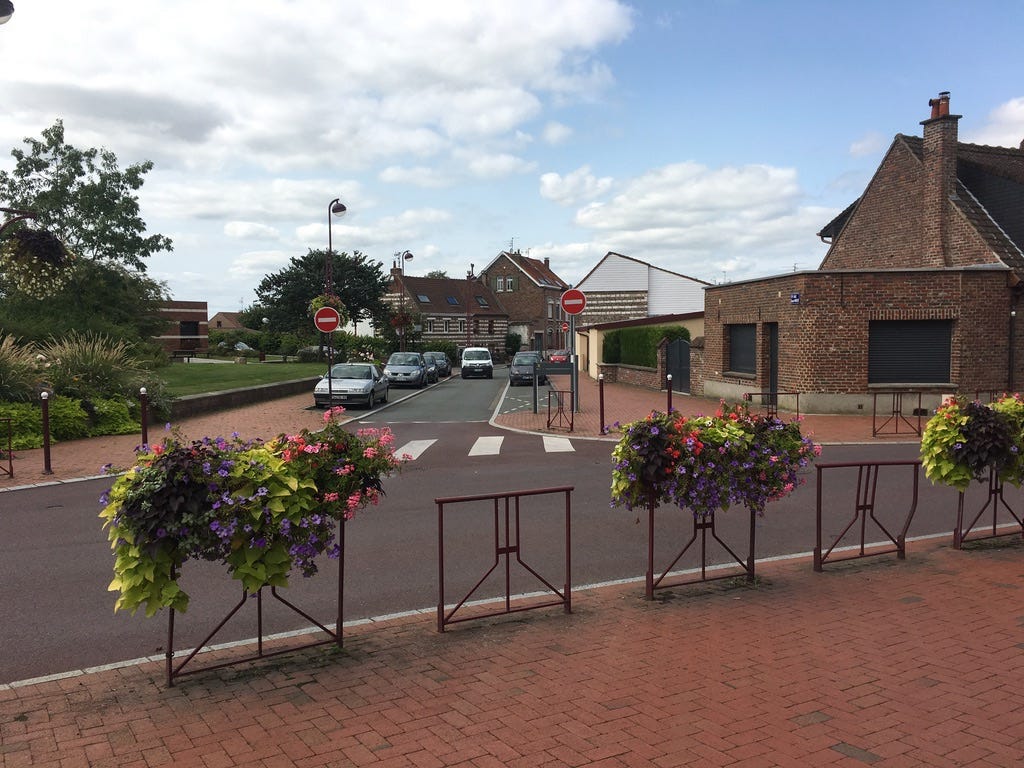
Found a pleasant little café on the way to the gare. Had to buy a tisane to pay for the loo. Looking over the menu, everything so much cheaper than in England. Half price. Easily. You should go. It was jolie.
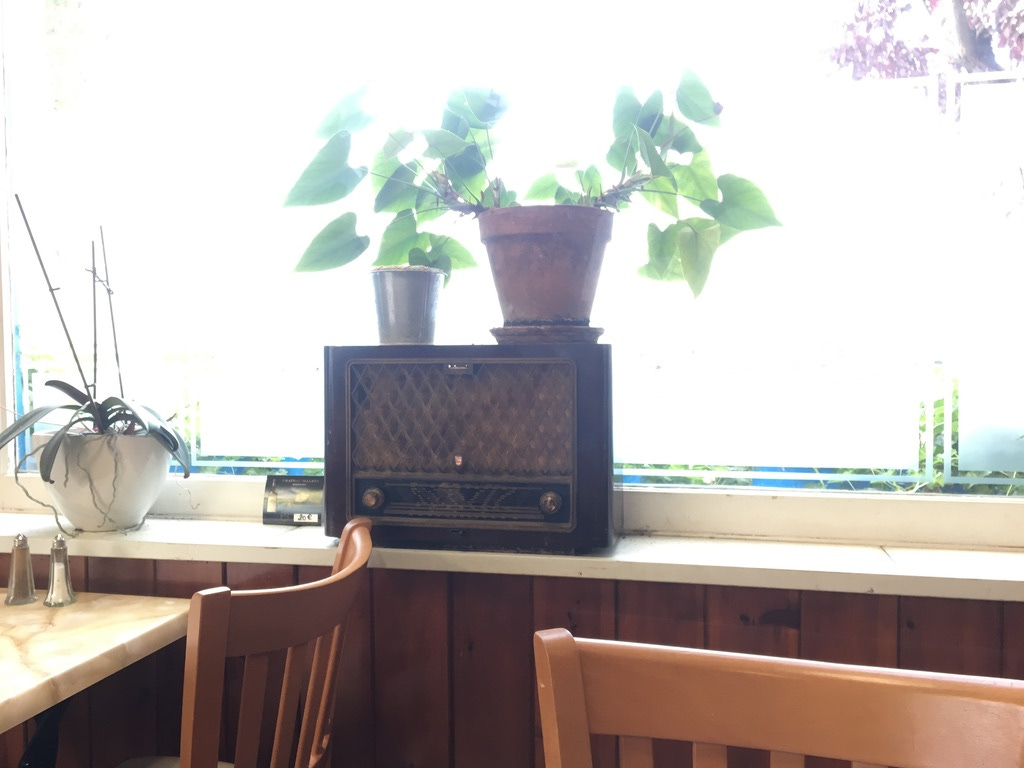
I suppose I could have lingered on my tisane for another hour but I didn’t know then the trains don’t necessarily run every hour. And they’ve carefully taken out all the seats on the station platform to make sure casual tourists such as I get up and go to buy more things. Or, in my case, pace up and down wondering when I’d get back to Belgium.
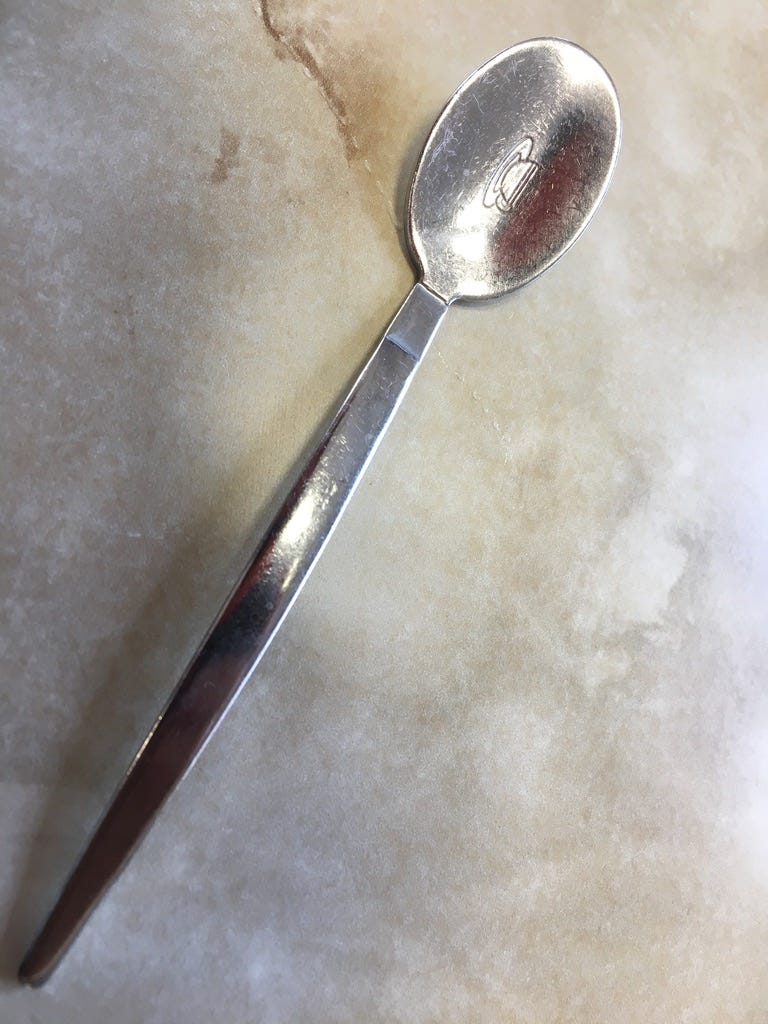
Spending a euro on a cup of mint tea is hardly bolstering the local economy but I was glad to do it!
Many thoughts about Anne and François, particularly around mothers. On the night they run away from Templemars, François’s mother could report the runaways to the executioner brother. He may be the loathed executioner but he is a dutiful representative of the highest law in the land.
‘Don’t worry,’ Anne might say, ‘she’s not the first mother who’s betrayed me.’
François must know he’s letting his family down, shaming them by leaving the church. Why would he go to them? Anne still has some romance about families? No! She’s just discovered her blood mother has been her nemesis all her life! So many questions to solve. She keeps my mind busy, young Anne.

Anne was born in Breuil and I believe the family went on the run when she was three, her mother tried to get across the border and travelling as far North as she could, landed in Templemars. Was she looking for a likely convent? Did she stop in Reims and take advice? However she did it, the mother found sanctuary in Templemars, as did I. A quiet town.
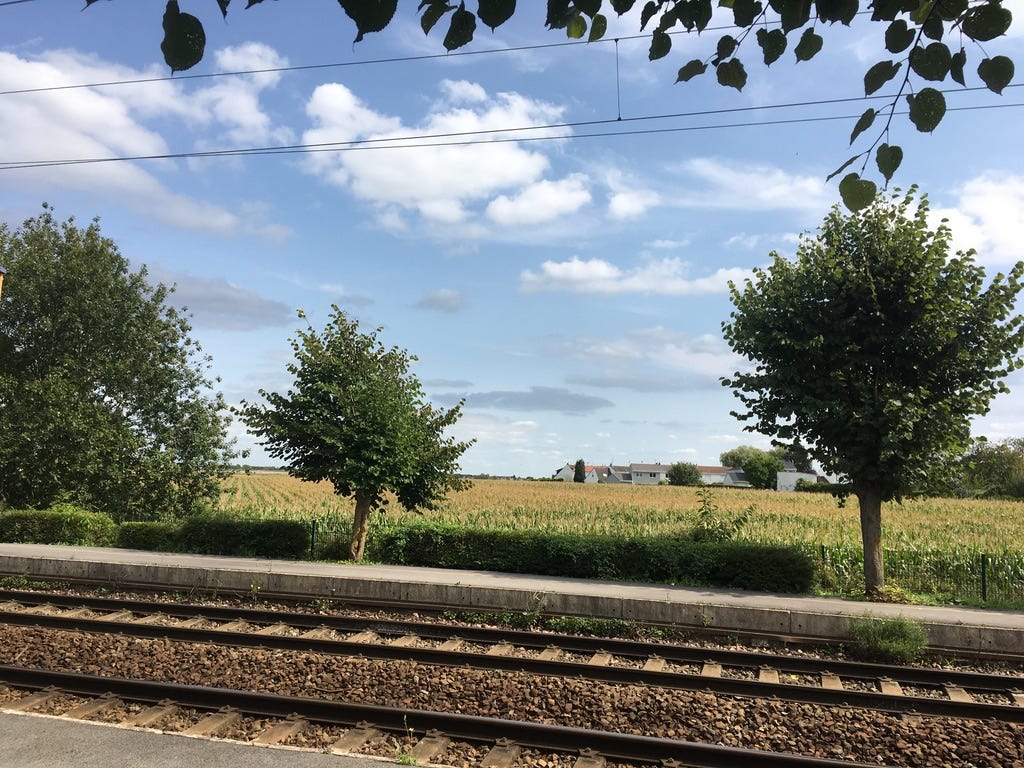
A very, very quiet time during long déjeuner!
I could have walked.