
Stratford-upon-Avon
That's entertainment!

‘“Ah,” said [Lord de Winter], “here we are, at the last act of the tragedy. You see, Felton, the drama has gone through all the phases I named; but be easy, no blood will flow.”
Dumas
24th August 2018
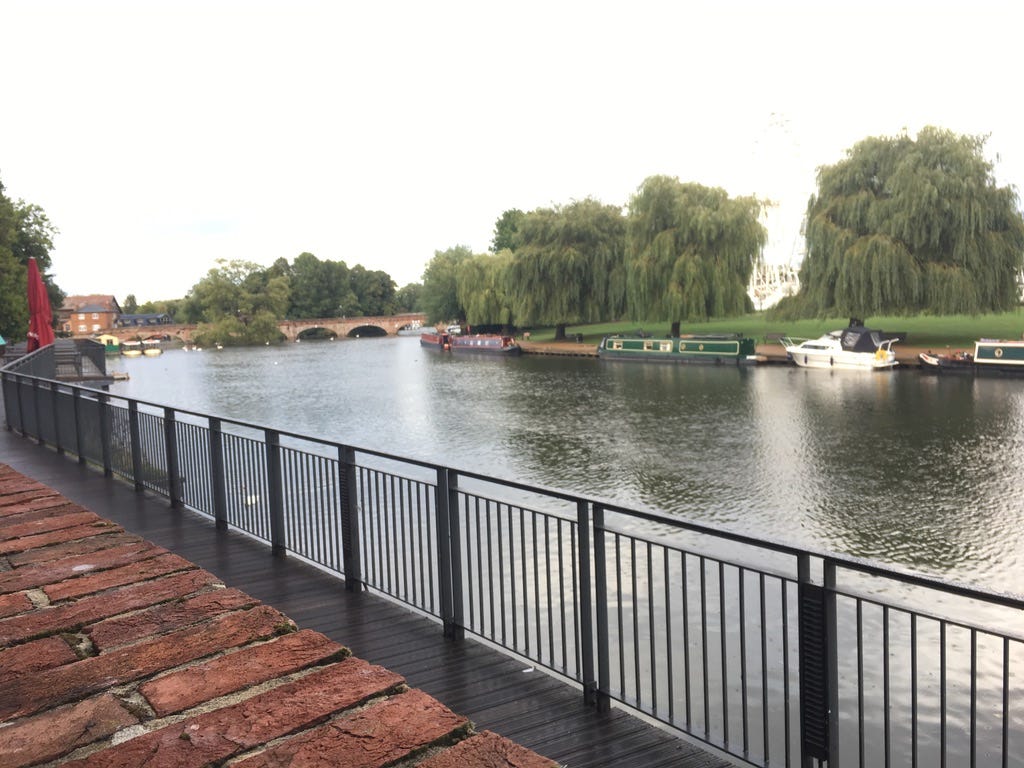
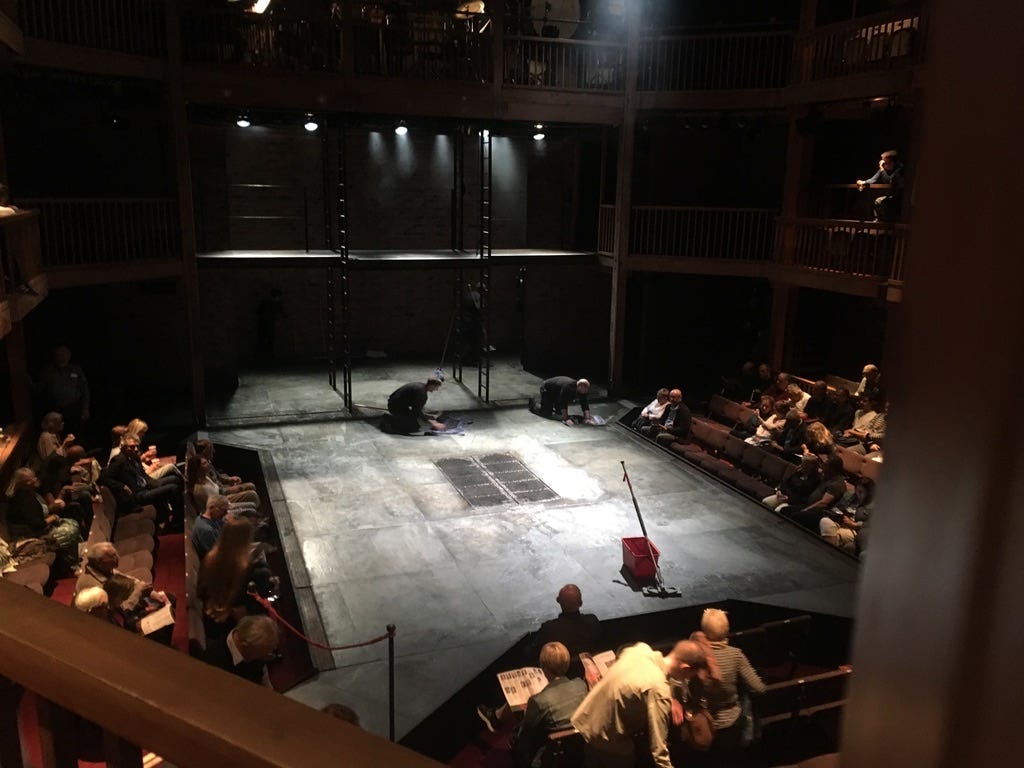
Once I settled in at the YHA, I began my visit, of course, with the Royal Shakespeare Company (big shop) and bought a ticket to Tamberlaine, the bloody play by Kit Marlowe.
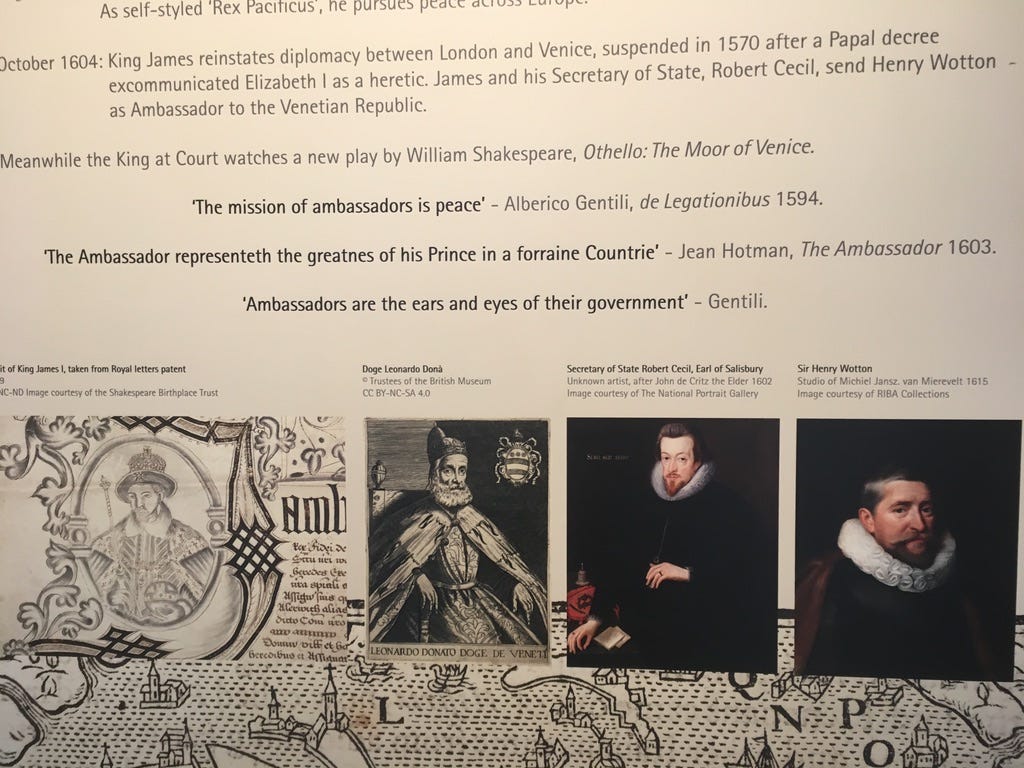
The English summer brings visitors by their thousands and the museums and theatres of Stratford-upon-Avon are ready and waiting, with humour, education, and cash registers. Searching as usual for my fictional character in her time, I found Guide Florence at the Shakespeare Centre guarding a fascinating exhibition about Ambassadors for FREE. There was plenty of Jacobean interest to be found in amongst other historical items you would probably have loved but, you know me, I only have eyes for the early 17th century.
Guide Florence explained that King James wanted to make Venice a Protestant enclave in the midst of Holy Roman Empire. But, respectfully, Florence, the notes say Sir Henry Wotton was there for trade and the Italians wanted to talk about piracy most of all, a massive problem (as will be revealed later in Milady’s journey). Wotton was allowed to worship as a Prot - with his household - so it was a tiny little Protestant corner - but I don’t see the pacifist James wanting to upset anyone. It seemed to me a triumph of diplomacy, after his predecessor had been excommunicated!
From the Exhibition of Ambassadors: ‘In Henry V, the ambassador from the French Dauphin delivers the young King Henry an insulting gift. Tennis balls - toys to occupy the ‘boy’ king. The mock prompts Henry’s declaration of war.’ (Compare Putin’s gift of a soccer ball to Trump.)
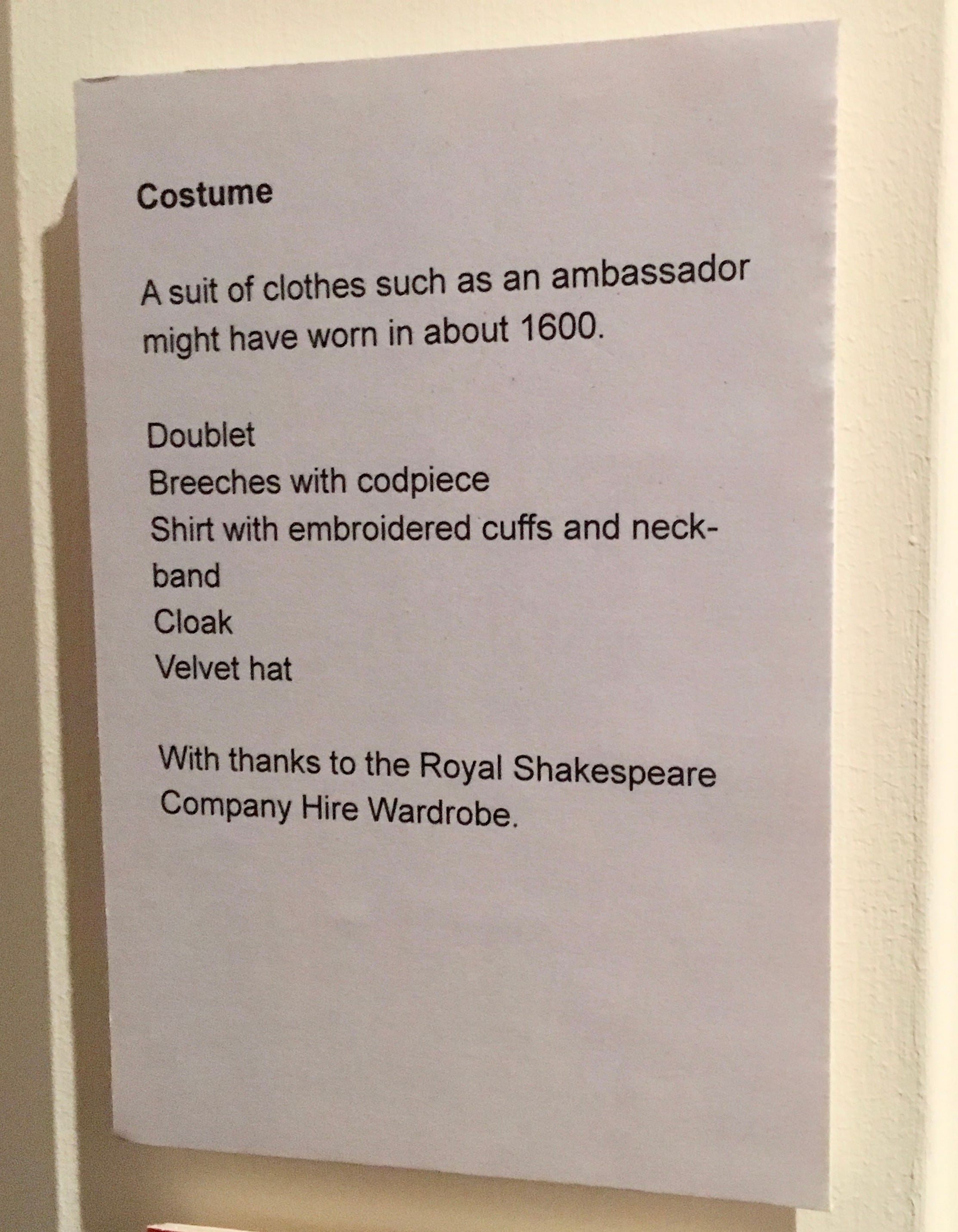
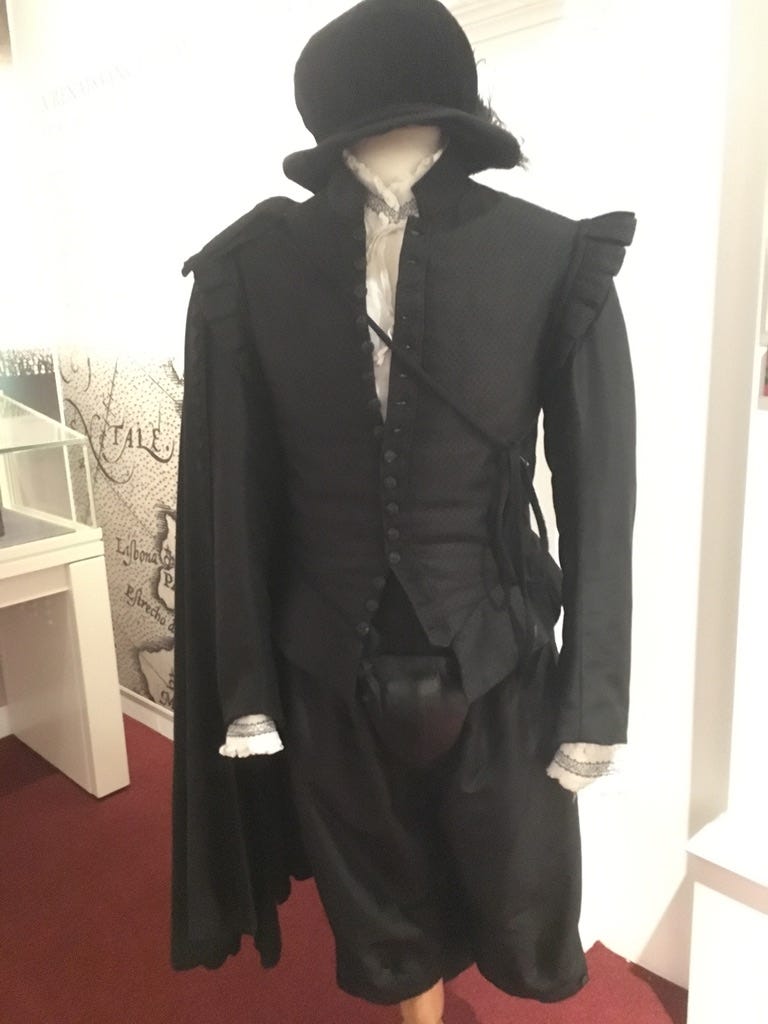
Guide Florence discussed The King’s Men (Shakespeare’s theatre company) and James’s relationship with Shakespeare; reasonably intimate given The King’s Men all dressed in red velvet and acting like mad for formal occasions like the Coronation and the brokering of peace with Spain, probably attending the Somerset House Conference, and supporting James during the plague furlough. Shakespeare must have known about the attempts on the King’s life in Scotland before the Gunpowder Plot, and let’s face it, actors sniff out finances when theatres go dark. Smart actors will take the red velvet and do whatever the King wants!
When Guide Florence, suffering from her recent spider bite, made her limping way to her break, her replacement, Guide Martin took over. Once an actor, then a lecturer in stage performance in Leicester, he retired and now volunteers for Shakespeare every Saturday. He plays in the Am Dram in Leamington and gets to see all the stars who visit Stratford for nothing. Can’t afford to buy property but happily rents and is involved in the ancient heart of the theatrical world.
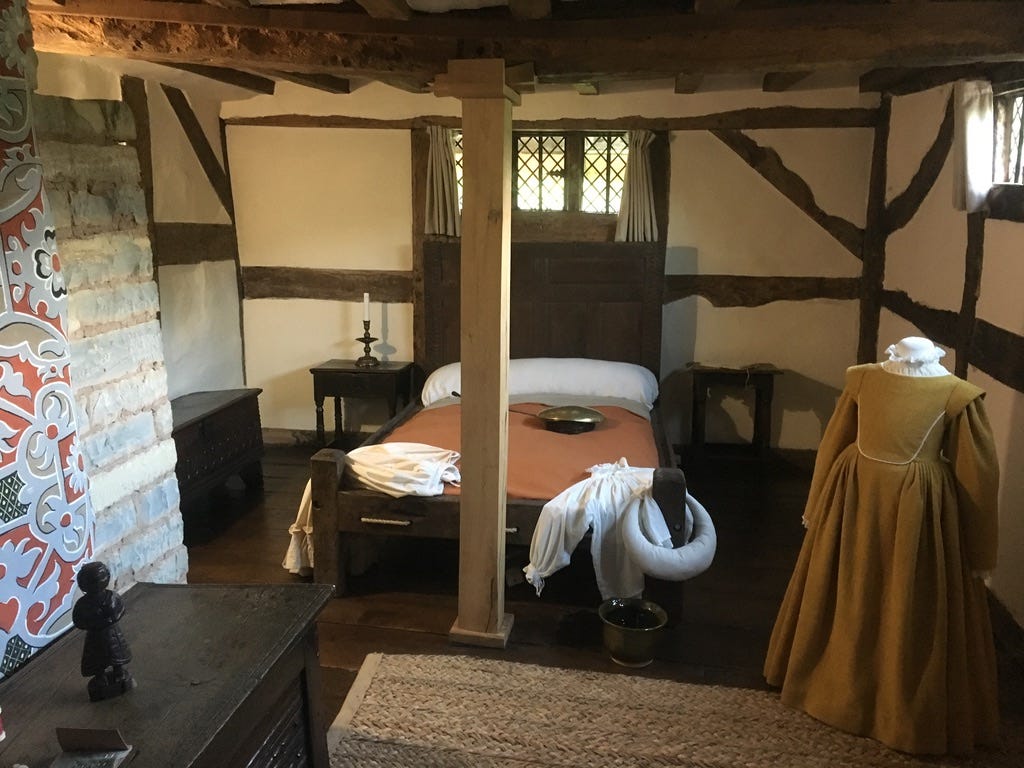
Still hadn’t set foot in The Birthplace and I’d managed two excellent discussions. Guide Martin had really enjoyed Tamburlaine. Well. Each to their own. I think it’s a style thing. The intellectual recitation - which he thinks there’s less of now than in former times - leaves me cold. Guide Martin said the ensemble were enjoying playing Tamberlaine but hated the Scottish tragedy, directed by a mere woman, Polly Someone, who had an idea that a clock stops at 00:00 when Mac finally dies at the end. Martin hated the show and, for that matter, all productions ever directed by a woman. Not helping the female directors’ cause at all, said Martin the guide.
Spent the rest of my Stratford-upon-Avon day trying to find something between 1618 and 1624. What might the houses have looked like then? How Jonson and The King’s Men might have been AFTER Shakespeare died, near his 52nd birthday. The museums were all beautifully set out and staffed. Being summer holidays, roving actors sniffing funds relished their parts, playing off each other and the visitors with gusto. At the New Place I questioned the shameless greedy vicar who liked not Shakespeare and chopped down his mulberry tree - Gaskell by name - I think. When quizzed, I judged him guilty and bantered hilariously with his young guard who taunted Gaskell most excellently.
Then to The Hall’s Croft, where Susanna (Shakespeare’s daughter) lived with Dr Hall; a Jacobean house turned apothecary. Most amusing chats with a man and a large curly moustache that seemed to belong to him but may not have due to its exaggeration. All staff generous and funny.
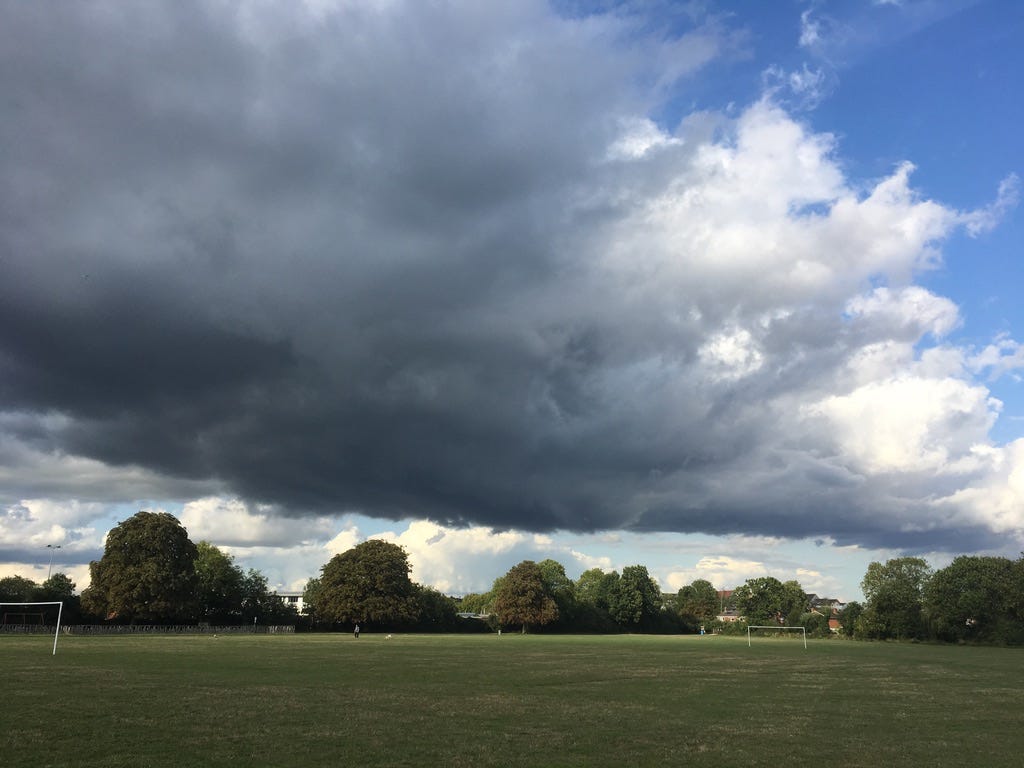
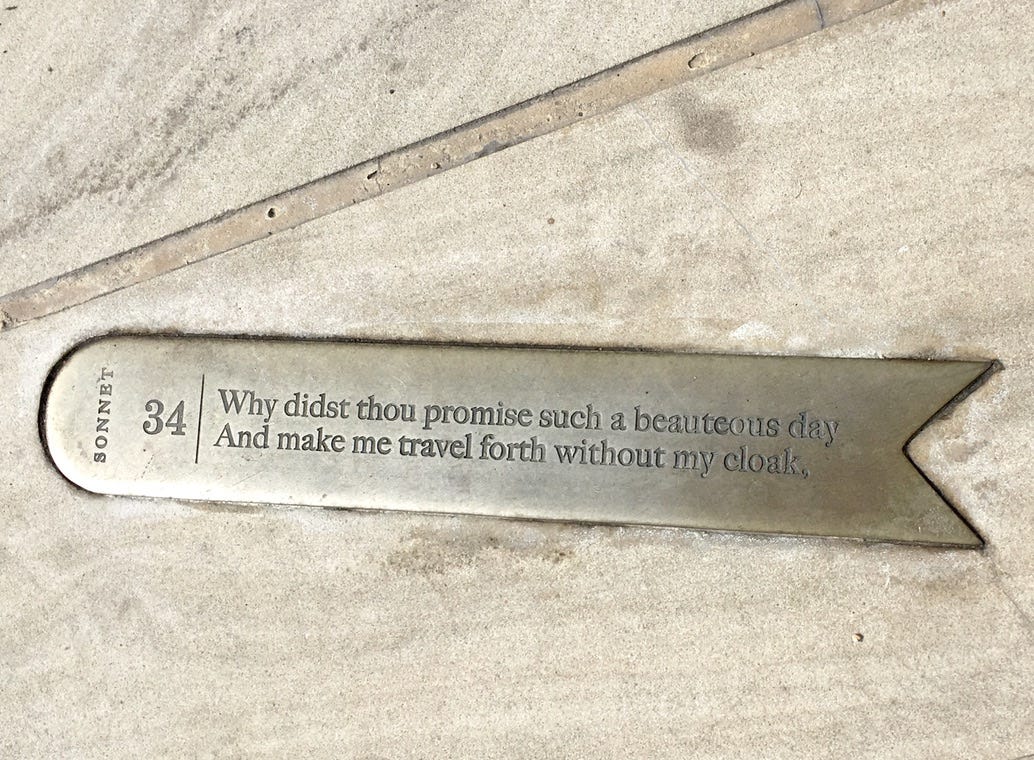
Mr Moustache suggested it would be worth going to Ann Hathaway’s farmhouse and after a brief hop down to look at the grave at Trinity - a very pretty little church featuring shrine - I strolled under impending clouds of doom to see the lovely garden and imagine young Shakespeare and Anne a’wooing in the orchard. A temporary woollen tunnel tied with yellow tags encouraged visitors to crowd-write a new version of Romeo and Juliet. It hadn’t caught any shape as yet - but people connected with the idea of, ‘what do you think the play is about?’ Encouraging way markers - entrances and exits dividing the corridor into Acts - offered some structure, but still tourists insisted on scrawling such pithy thoughts as: ‘if a rose by any other name,’ or, ‘a very sad play’. One comment suggested Juliet should have married the first bloke, got the poison to knock him out, and then married Romeo with her inherited money and relaxed. Genius. Why has no-one produced that version?
Did my booted feet pound the actual flagstones in Hathaway’s kitchen where the great man’s feet had trod? And his wife, and all her family, of course.
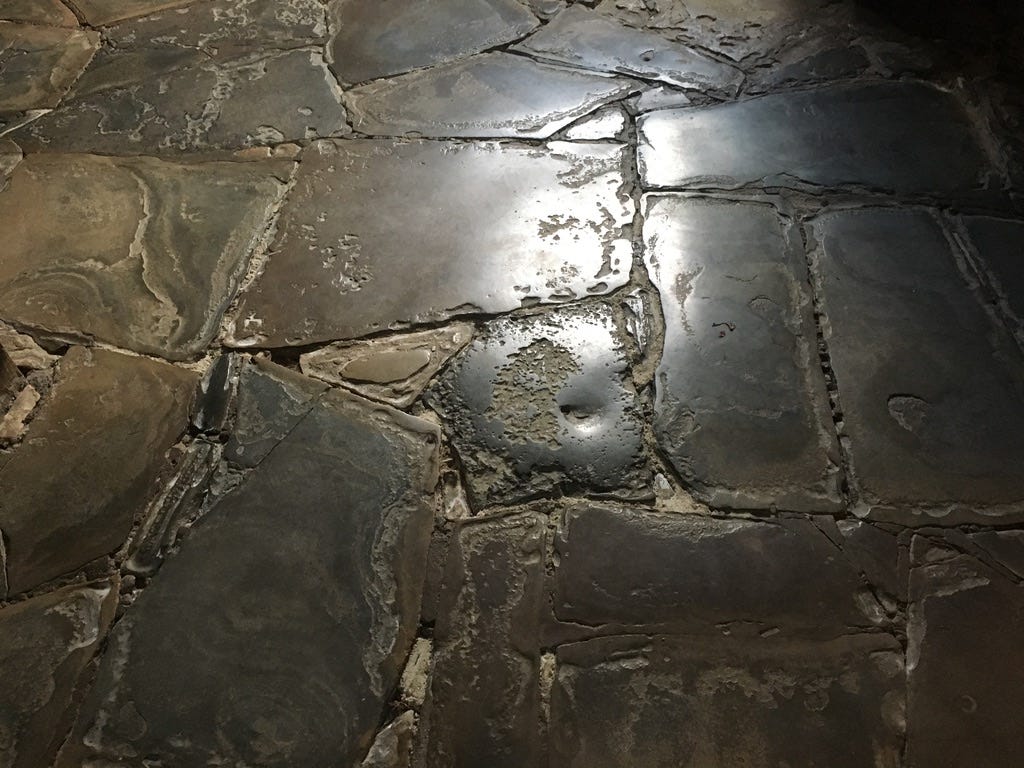
Time does indeed make us all dust but when a man holds so many ideas and weaves so many threads, and his company write them all down to be published after his death, Shakespeare undoubtedly was a wonderful writer. All those quotes and blissful thoughts and dreams still flit and fulfil and fly and even Dumas surely feasted on some Shakespearean iambic pentameter stew in his writerly life.
On the walk back to town I was stuffed. Stopped at Sainsbury’s and walked back to the YHA (about 4km) instead of going to see ‘The Merry Wives of Windsor’ played as footballer’s wives in reportedly Essex laddette style. I didn’t want another disappointment after such great improv and sense history of Shakespeare’s footsteps and life in the township itself.
We should count ourselves lucky to have such a centre for people to celebrate life, poetry, and theatre of Shakespeare and his companions. I know I do.
Two recent films that visit Stratford-upon-Avon, Hamnet and Mr. Burton, are both love offerings to the theatre. I hope you can see them.
We saw Lear at Belvoir recently and that also involved a lot of blood and a lot of serious mopping between acts. Yet the mopping was done in a strangely amateur way, with a towel manipulated by the feet, rather than an actual mop.