Hunting Hardwick Hall
Smell the lavender and chamomile in the rushes

“Well, one day when she was hunting with her husband,” continued Athos, in a low voice and speaking very quickly, “she fell from her horse and fainted.”
Dumas
June 2023
Derbyshire
Continuing the hunt for Milady, I stayed in an Old Dance Studio in Chesterfield because I wanted to visit Hardwick Hall. I didn’t dance, although check out the spire!
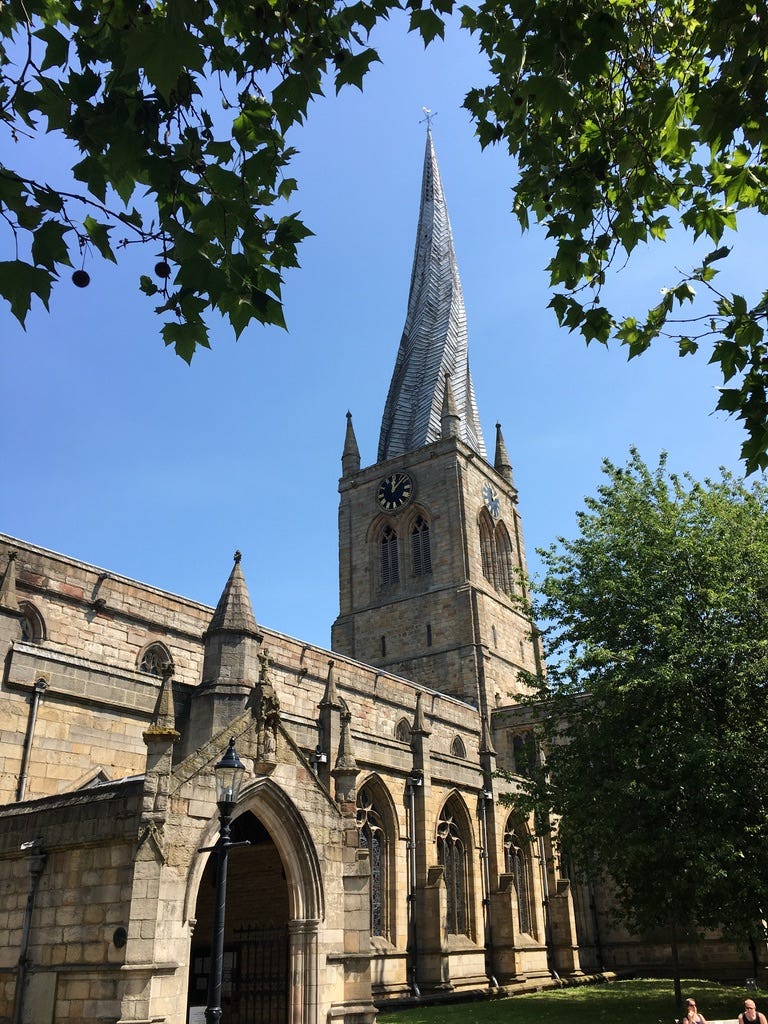
Chesterfield is famous for their crooked spire, probably caused by the sun’s heat on the medieval lead tiles directed more to one side. Another theory holds perhaps the green wood bearing the lead offered some twist properties as it aged. OR. Perhaps it is dancing. Very slowly. Let’s twist again, like we did in Chesterfield …
I popped into Tourist Information to explore bus routes to Hardwick Hall and the gentleman on duty was happy to supply details of where to catch and timetables. His head jerked up in lightbulb shock as he remembered, there was a walking trail! Ask the driver to let you off at the start and they’ll direct you. It’s called the Rowthorne and Teversal Trail and needs local knowledge! Ask the driver.
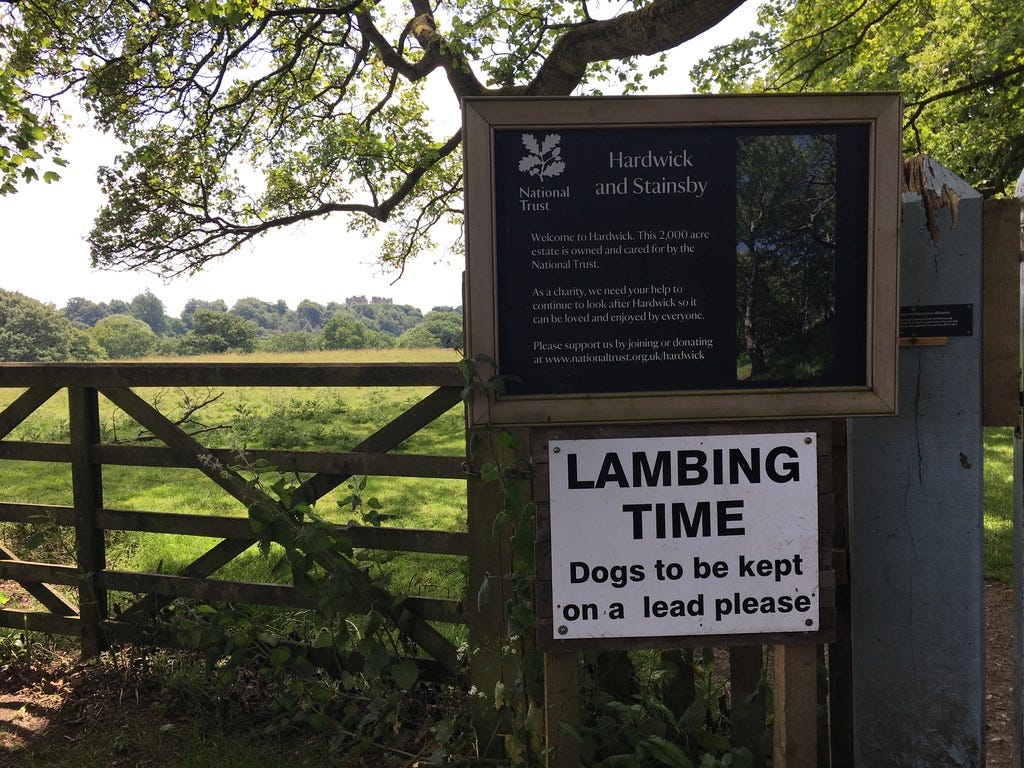
Once I negotiated the bus stop, the bus, the busy road, the march through semi-suburban back streets and unattractive gardens barely containing angry dogs, the path quickly became a wonderful trip down memory lane which in turn became a leafy tunnel to the farm. Really felt like walking back in time which is a far better way to do it than in some stinky old car. Of course, Milady would have visited by horse power, perhaps stinky at times, depending on fuel.
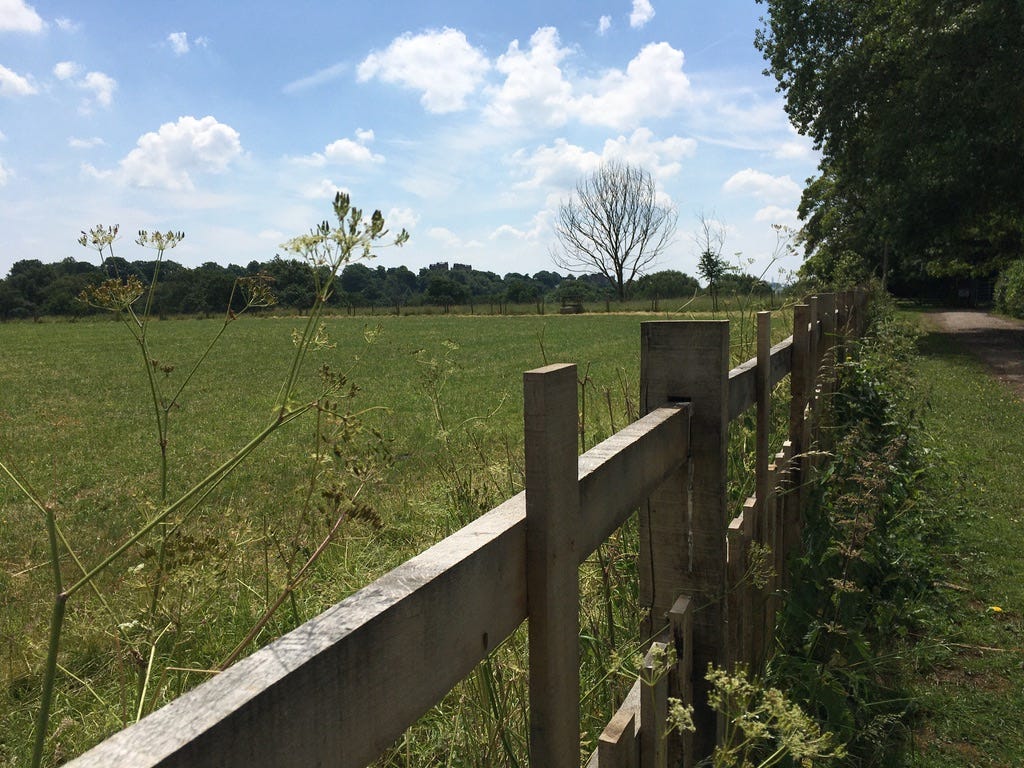
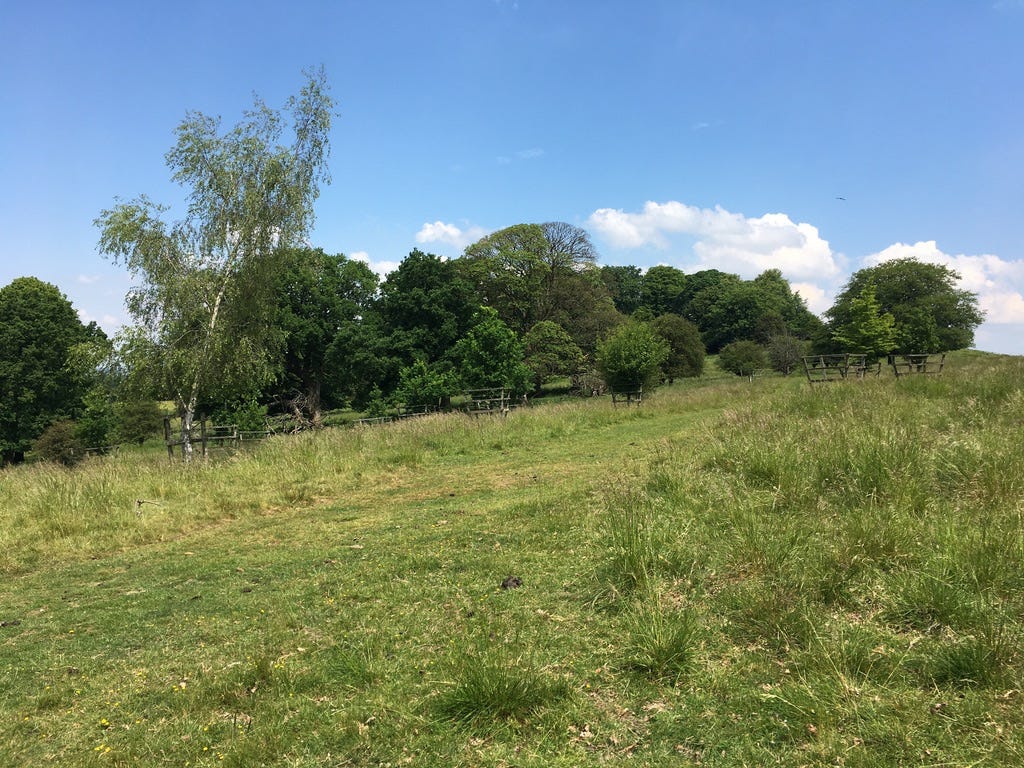
As you approach you can just see the roof of Hardwick Hall over the paddocks. Once through the farmland, cross over the road to the car park, and walk to the main lawn to see the Hall in all its glory.
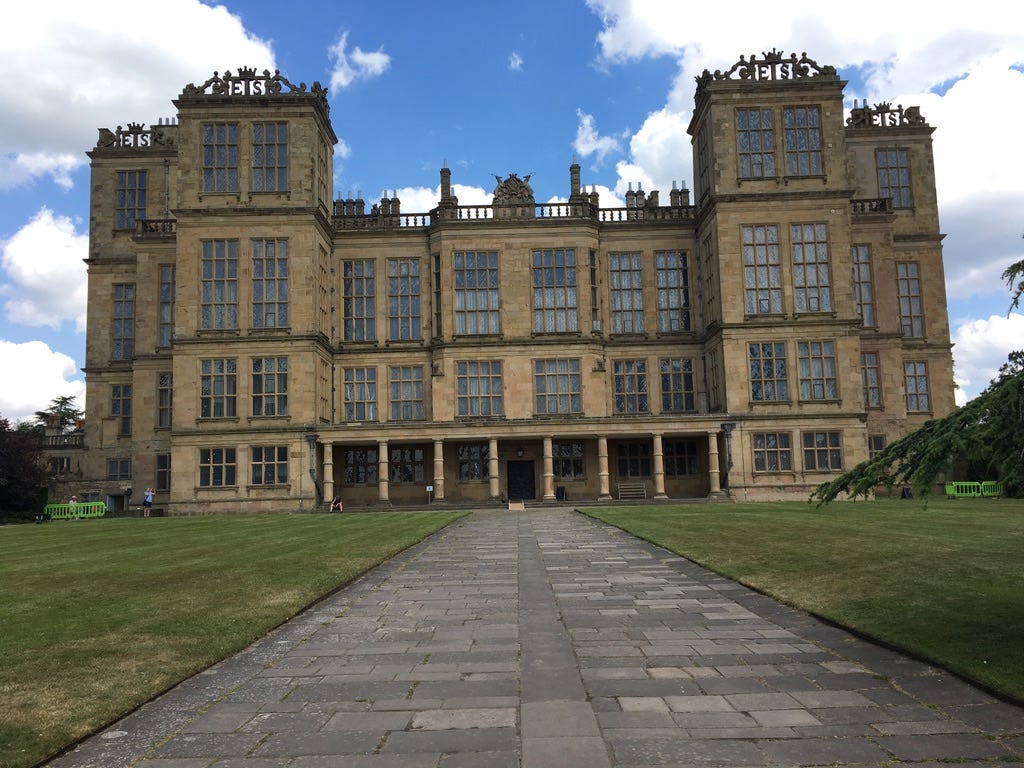
Way back in the 1590s Hardwick Hall was built by Bess Hardwick, known as the richest woman in England (beside her best friend Queen Elizabeth I). It was the glass frontage that caused the fame. Someone said, "Hardwick Hall, more glass than wall." This is the second version, the first in ruins nearby. That was built piecemeal - constructed around the old medieval house under it.
Elizabeth Hardwick was a canny woman, gaining wealth by widowhood. She started out from a poor farm (Hardwick means sheep farmer) and went to work in a nearby grand house, marrying the son. When he died at thirteen years old, she served as lady’s maid to the mother of Lady Jane Grey. There, she spotted Sir William Cavendish, married, had eight children and started her real estate portfolio in earnest. Her fourth husband, 6th Earl of Shrewsbury, grew poor from his responsibilities looking after Mary Queen of Scots. For fifteen years he watched his wife (from a distance) grow increasingly wealthy. Queen Elizabeth I could not save their marriage from his jealousy and he died away from Hardwick Hall, leaving his widow to marry off her children from previous marriages to his children (her step-children) very neatly organising her now fantastic estates, keeping it all in the family.
The guided tour started at the top with the High Great Chamber. The evocative element of history was the aroma of the rushes plaited in stripes, together with lavender and chamomile, that covered the floors. At that time the warm fresh smell was redolent, as an outsourced company, Rush Matters, was replacing a section.
Obviously the matting used to be made from local plants from the Hardwick ponds but care and upkeep remains the same. The drying rushes must be kept damp and pliable, sprayed regularly to prevent the mats drying out and causing dust. Carpets were only used for tables.
The walls of this chamber are covered with tapestries, including 8 depicting the story of Ulysees, while a freize running around the top of the room displays the hunting prowess of Diana. The Royal Coat of Arms is central to the chamber, and central to Bess’s hopes her ward and granddaughter Arbella Stuart would be recognised as the rightful owner of the English throne.
The Long Hall, used as a portrait gallery, runs the full width of the house. Probably used for exercise in inclement weather it is hung with tapestries depicting the story of Gideon and the Angel, even though Hardwick was Protestant. Originally made for Sir Christoper Hatton, Elizabeth Hardwick purchased them in London to decorate her new building. Remember that tapestries were the latest and most scenic form of insulation.
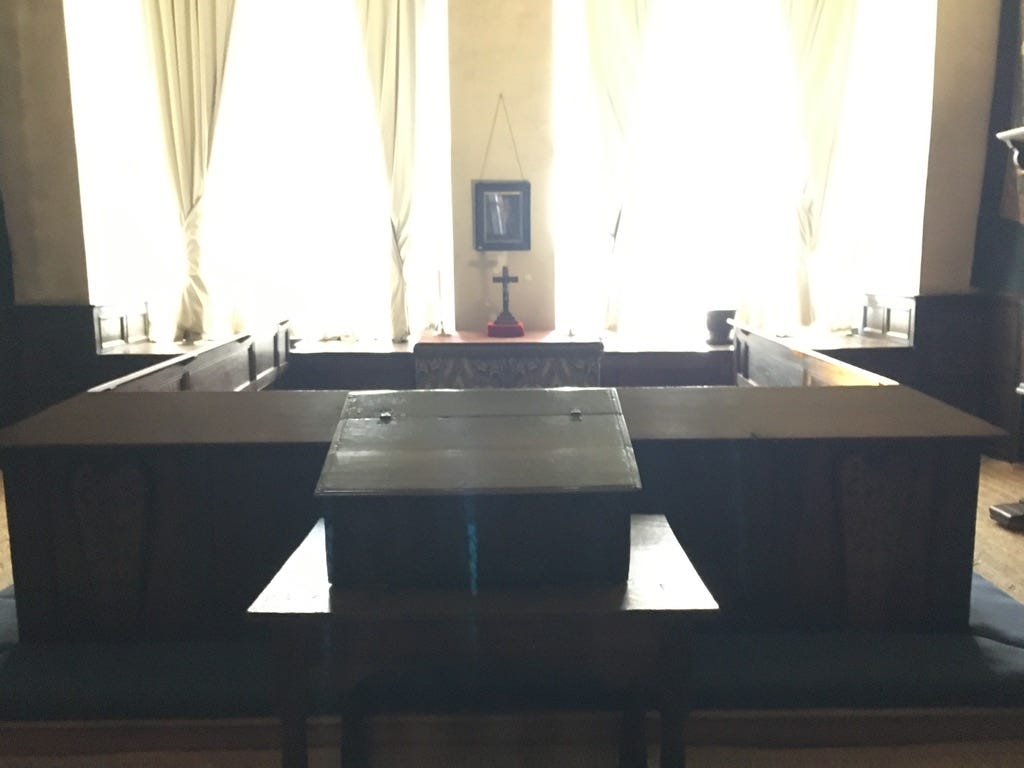
Back downstairs, in the entrance Hall, three large tables were placed across the hallway - now one long - where the staff were fed and watered. If a personage came to visit Bess Harwick by the front door, all staff in attendance would stop eating, stand, and wait until called to duty.
The Minstrel Gallery would be the most powerful point in the house, overlooking the staff dining area and the waiting room for her guests. She could snoop on her staff and spy on her visitors, observing their unsuspecting backs. She could then prepare in her private rooms on this level, and forewarned to their number and importance, go down to her office, or perhaps her manager’s office, and greet her guests dressed for success.
Unusually, Bess built the house upside down. The staff slept in the hallways on fold up straw mattresses which would have been placed up against the wall in the daytime. When the crops failed two years in a row around 1603, Bess took care of her loyal staff.
As I walked, I hunted a connection for Milady. On her trip north (or south!) the entire retinue might stay in in the Best Room or the Old Hall. Bess died in 1608, so it is possible that the lord, the favourite son (Baron Harwick) William, First Earl of Devonshire - 1620 — or his son also William - may be in residence.
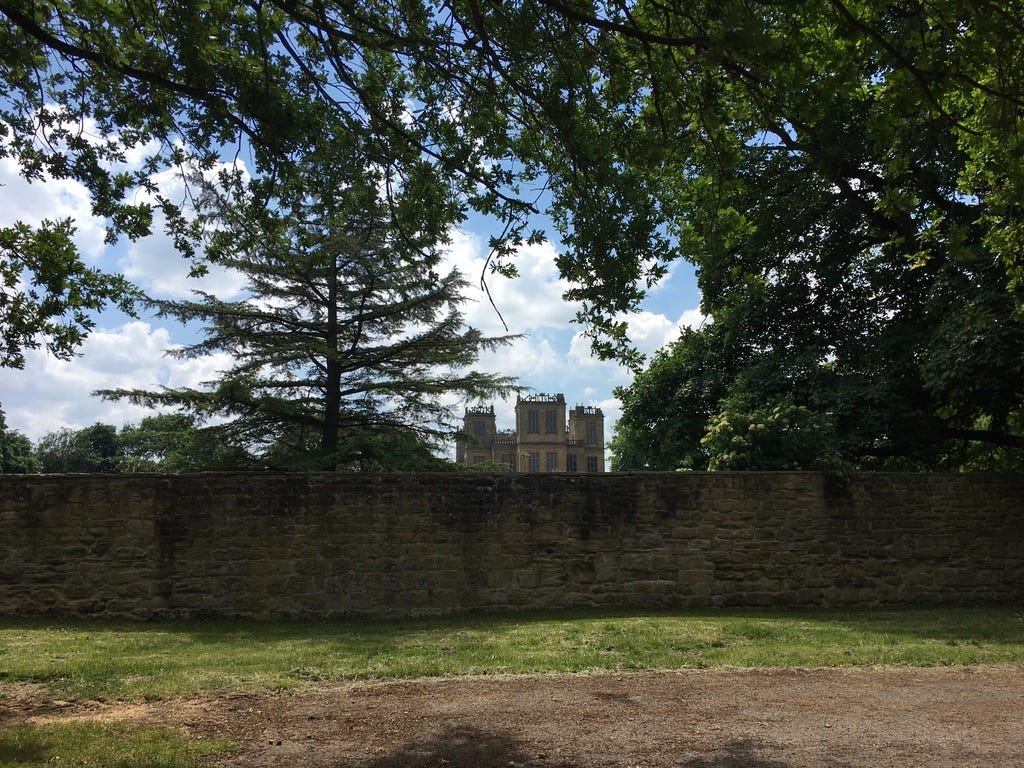
Asking the guides on duty if unannounced visitors might arrive to request food or accomodation, the response was a resounding YES. Guests had to get through the gatehouse before running the gauntlet of the staff. Lord Clarik could arrive, and if the elderly William not available or not at home, could ask for food and bed - possibly in the Old Hall rather than the business orientated New Hardwick Hall.
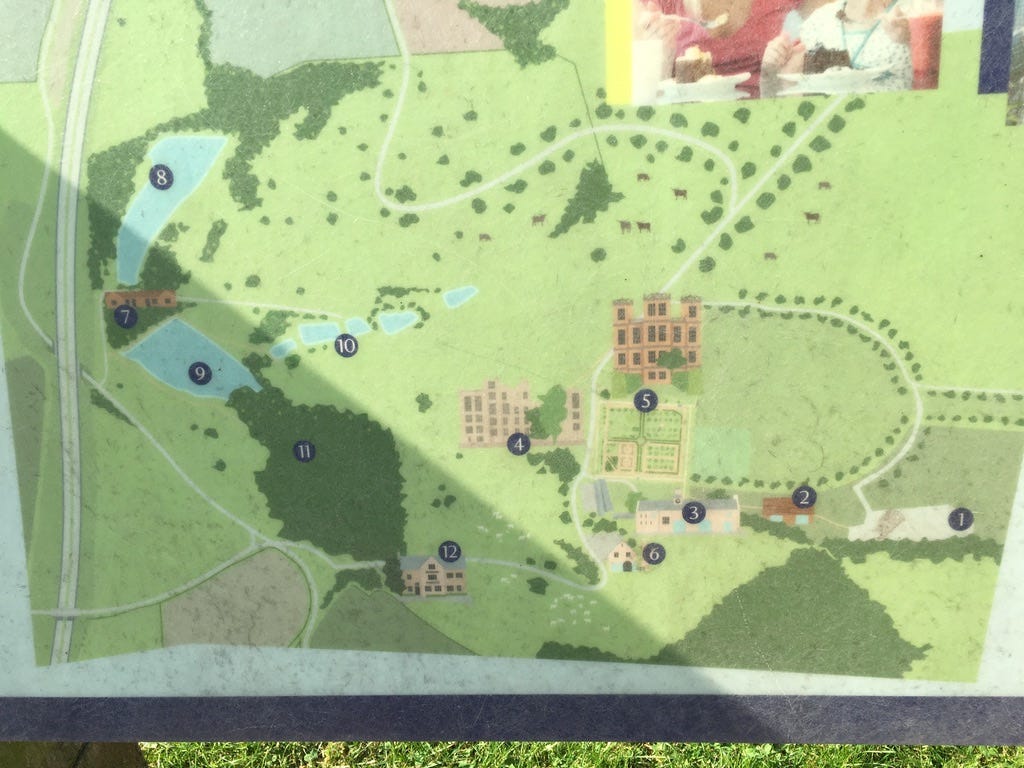
Had a good talk to the staff at the main ticket hall. I asked about the lands and plentiful orchards - was it possible to house or at least feed some homeless people in these days of dire straits? He said they were trying to work out how to get the community more involved.
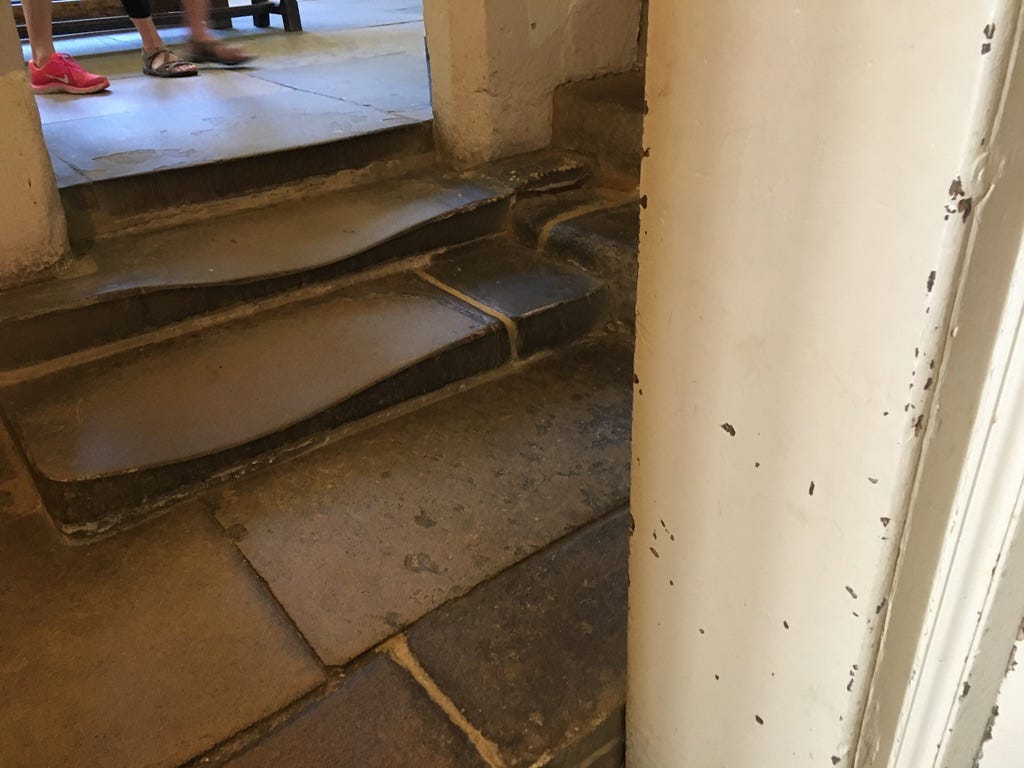
I walked back through the old ways and met the afternoon sun streaming through the green farm and then forest. Squirrels, rabbits, butterflies and three little girls in pretty summer dresses, as though they had skipped out of Michael Rosen, were going on a Bear Hunt. Shrieks and swishy swashy laughter silenced as they drew near to me. I should have pretended to be a bear.
Oh no!! Then I would have been prey. I had to keep hunting!