
Dover
“Here I am at last!”

At ten o’clock the vessel cast anchor in the harbour of Dover, and at half past ten D’Artagnan placed his foot on English soil, crying, “Here I am at last!”
Dumas
June 2017
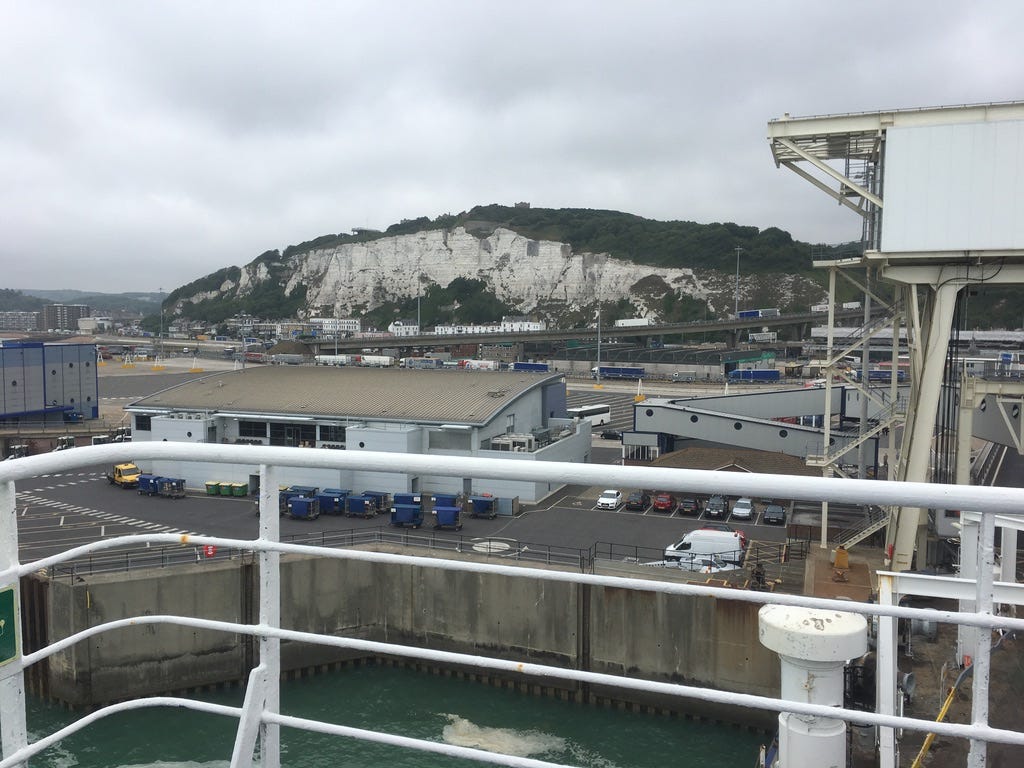
There was a storm. My little P&O ferry from Calais floated off the coast of England for a couple of hours before we could get back in line for a berth. I stared at the Grey Cliffs of Dover and the sea gulls swooped. The gannets looked like technologically advanced boomerangs in the sky with their neatly geometric wing tips balancing neat silhouettes against the tossing sea.
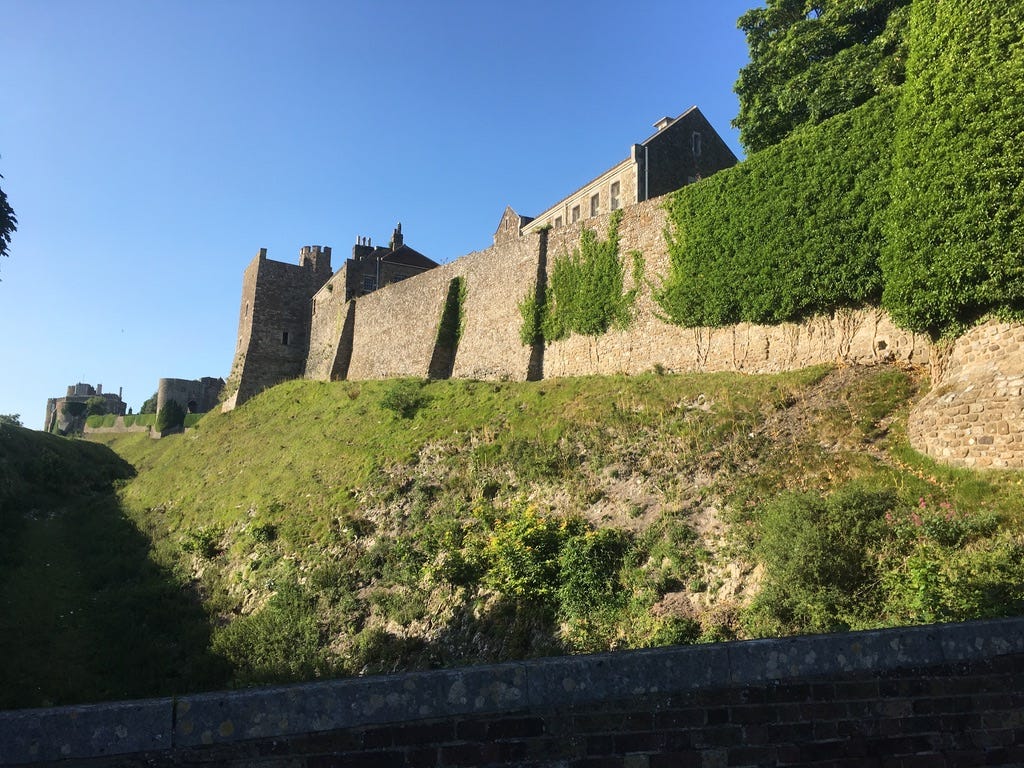
And there’s a great big castle on the cliffs. Built by a French guy who happened to be king of England. So Charlotte (you understand she changed her name on her way to England, don’t you?) would have seen a castle that looked like a French keep up on the cliffs of her new country. Those cliffs. Had she seen anything the like of those before? She’d been to Paris by then, and seen the Bastille and the Louvre, and, of course, Lille was a walled city, so she may well have felt some comfort in the familiarity of the shapes. But she was a stranger here.
Dover is the gateway to the United Kingdom from Europe. Or the locked door. A barrier or a welcome? Luckily, I have a British passport so I’m not the strangest stranger. And I’m not fleeing war or poverty. I’m only trying to find a fictional character.
First appearances of England streets in close-up - abject misery.
Walked off the ferry with two Brits - one who looked like an ageing pop star dressed as a teenager while the other in an awkward suit dressed like his own father. Both were about the same age, both angry in their different ways. Old formal man muttering with fury like a simmering kettle about being late, he’ll never take the ferry again, terrible inconvenience, he’ll never find where he’s supposed to be, terrible time, how dare the ferry hold him up like this, storming off in the wrong direction, getting lost. The teen/old man skinny with obvious back pain angry in a sad way, talking about it being about time Brexit happened, wouldn’t put it past Europe to want to punish Britain for trying to do the right thing to protect their borders, no, he didn’t want any help, he’d manage and where’s that old fellow gone? He should be with us? Teen/old asked if I knew where I was going. Well, clearly not. He pointed me in the right direction but the place was being refurbished and I walked across several lanes of busy traffic before I saw where I should have crossed.
The rain continued into Dover. I saw a local man dressed in stained dark-blue tracksuit pants and a grey anorak curved into a darkened doorway, hunched against the rain, trying to light a crooked cigarette in the shelter of a grubby looking shop. Tired women leaning on children in pushers, and elderly ladies struggling along uneven grey damp streets. It was overwhelming and I did feel miserable and I did go the other way and had to be rescued by the first smiling face I met, a lovely woman who proceeded to tell me she used to live in France (as had teen/old man from the ferry) and had to return to see grandchild number two, only to be diagnosed with some beastly life-threatening affliction so she had to stay in England to be with her family and the NHS. She put me right to the railway station and on I went from Dover Priory to Tunbridge, Redhill and finally, Guildford.
BUT THEN …
July 2017
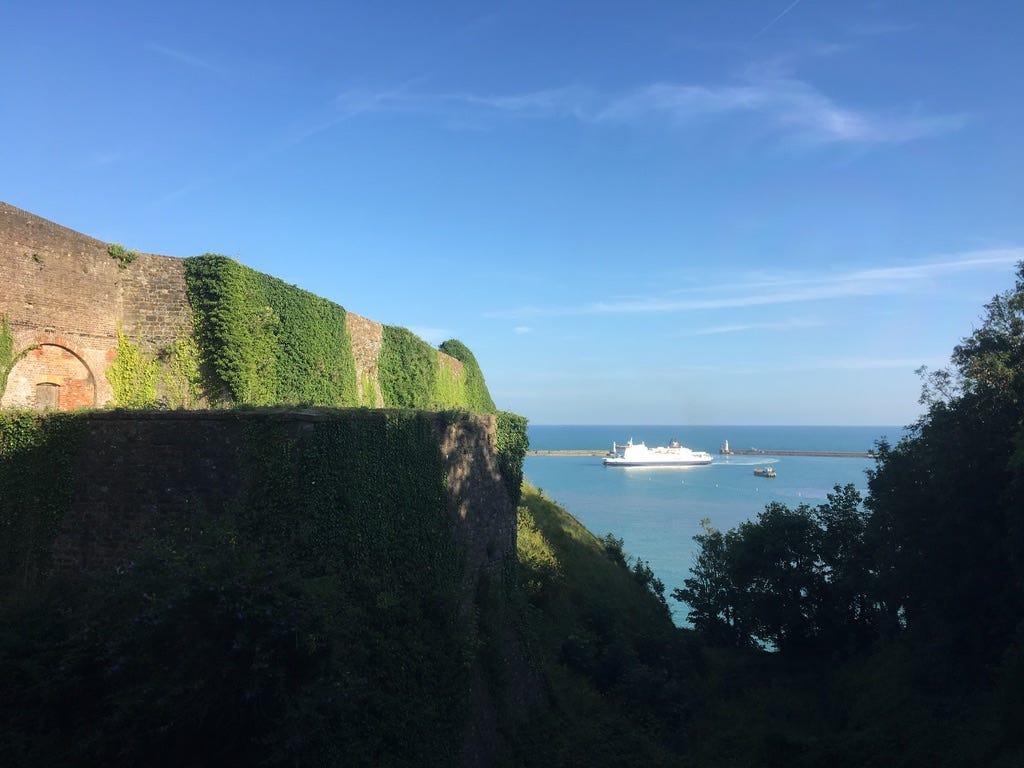
When I returned to Dover by train one month later, the sun was shining. I walked to my BnB with a bounce in my step and the local fair providing a energising steel-drumming beat. Sharon showed me to my comfortable attic and told me she’d cook me a vegan breakfast in the morning which really got my hopes up! Then I marched up the hill to see Dover Castle, an enormous spread of history, apparently planted in a neatly mown golf course.
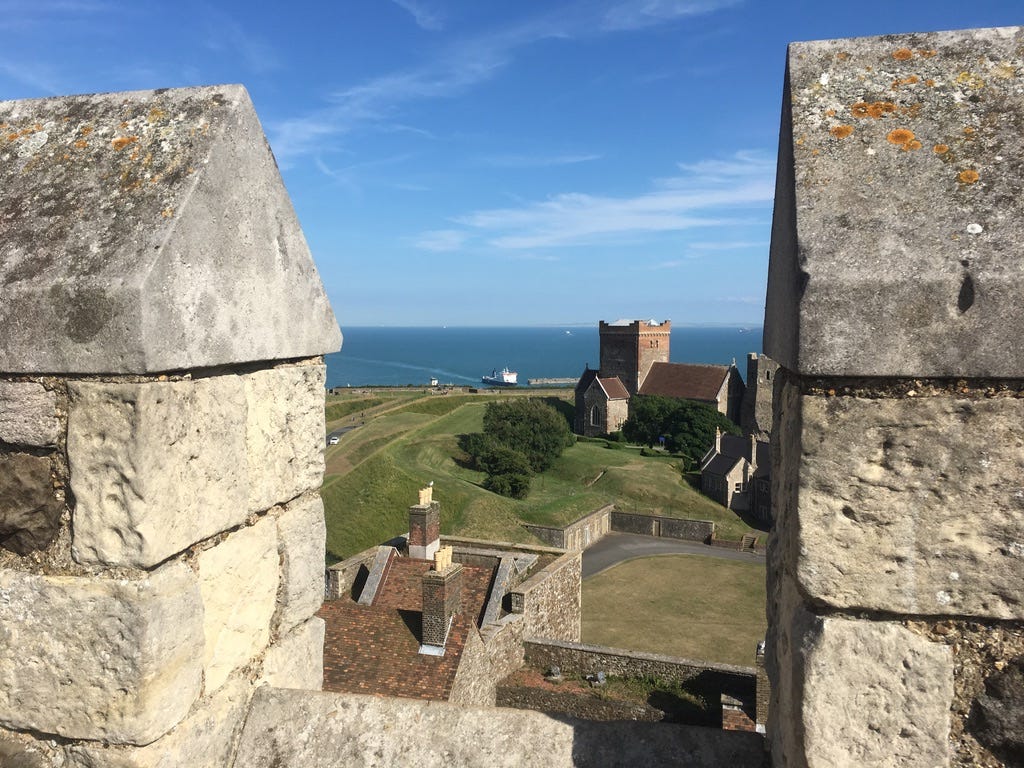
True to form I think I approached from the incorrect angle somehow holding my map upside down. The central tower was not the first building on the site but it certainly stands strong like a story-book castle ought, impressive in the sunshine. The worsted fabric kind of wall embedded with flints and rocks is such an English concoction.
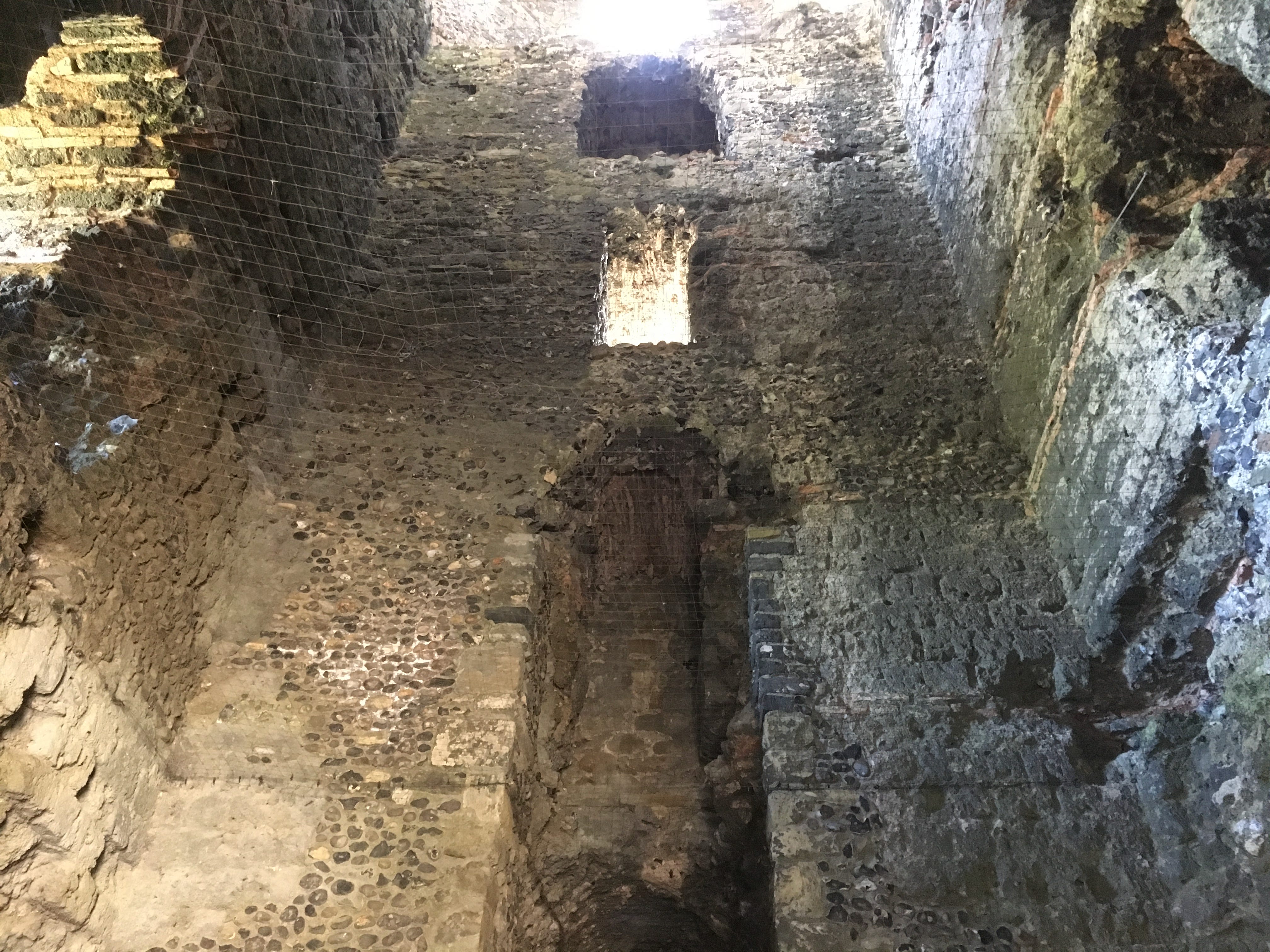
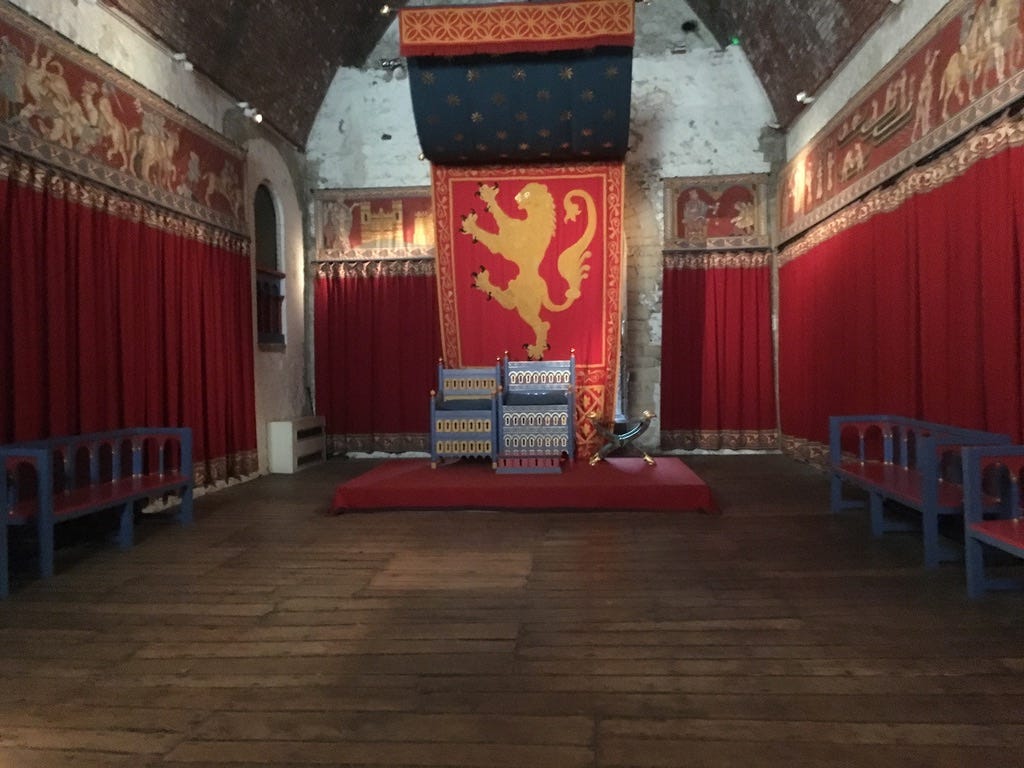
Even before William the Conqueror there may have been an Iron Age fort before the Romans who built a lighthouse there. Then Henry II stepped up to build a proper castle with Throne Room and all the trappings of medieval power. It’s dressed to give a proper impression. There’s even an episode of Time Team on You Tube that explains EVERYTHING!
This great historic estate really brought home the notion of having to step carefully wearing long skirts. How would you carry anything? There were no handrails then. You could always go up the widest part, the bit by the outside curve if it was the spiral staircase.
There was a sign that George Villiers, Duke of Buckingham had been there - of course he would have been - he was in charge of the navy after all.
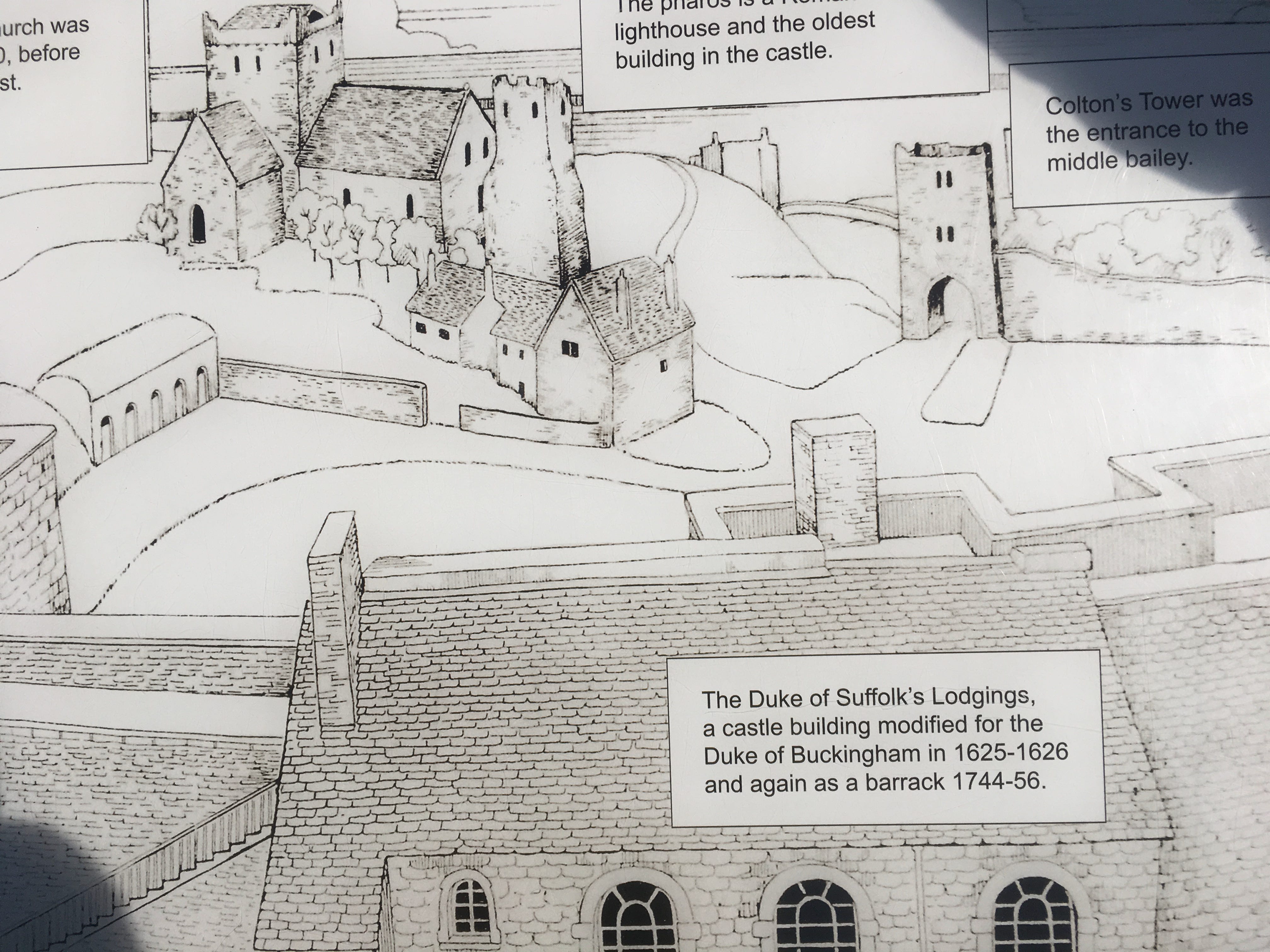
The grounds of the castle were green undulating hills, like a park. But one assumes there were times when those undulations were trenches and the pleasant sea views potentially held terror. Certainly life after the seventeenth century brought more war to Dover Castle but more modern things don’t concern me.
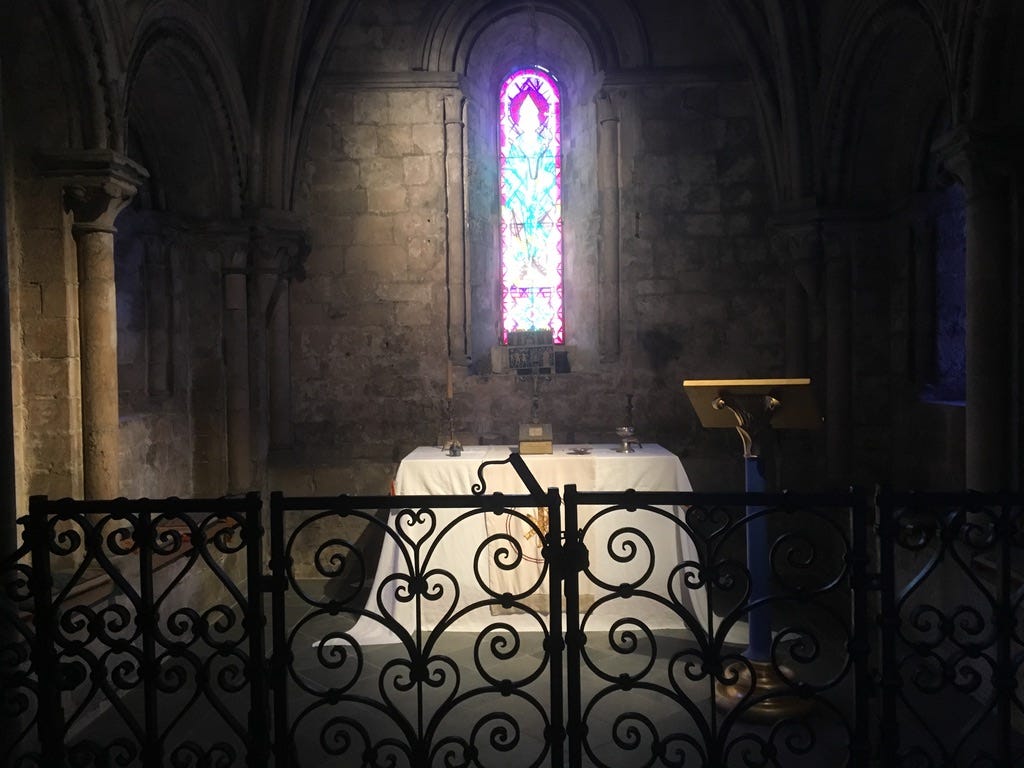
There was a feeling of industry, the walls winding around some kind of gravel driveways or paved roads within. There would have been bustling community with cooks, bakers, cleaners and servants looking after the soldiers and leaders. It would have been a hive of business and politics. And religion.
As I walked down to the ferry after my vegan breakfast I caught a glimpse of the Tudor sea wall - Henry VIII again - now covered in strangler weed and rubbish but it would have been pretty obvious in the seventeenth century
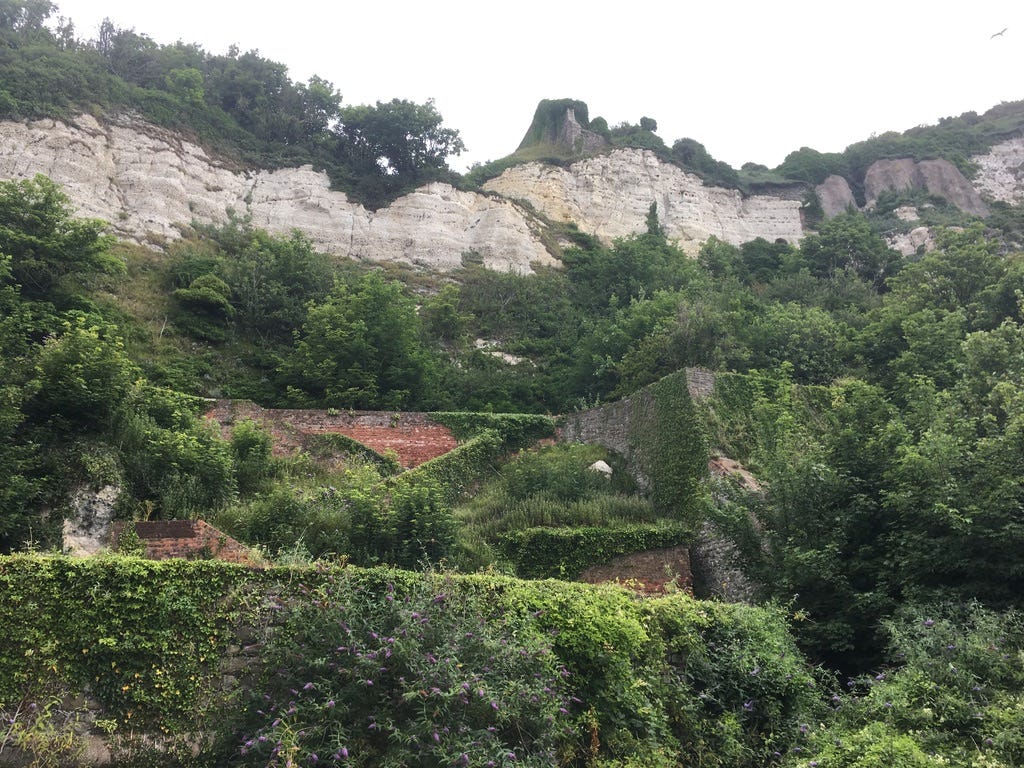
When I first arrived in Dover that cold and rainy day a month before, there was no clear foot passenger route into town. On my next visit, with building works and road signs everywhere, I walked along the cyclist route and found no way to get into the terminal. I could feel various eyes upon me as I wandered around the Terminal Control building (locked). When I started back to the beginning again, I met a fellow who said, ‘Go back to the Arrivals Hall.’ Well. No signs there for Departures! By the time I’d located the correct position, my bus to the ferry had left 10 minutes before. It would have passed me as I was up at the Customs building. Really think Henry VIII would have greatly disapproved of this slack behaviour. Off with their heads! I wasn’t alone. Other lost foot soldiers began to accumulate around me, waiting for our bus. I had to assume the foot passengers are all late and had to wait for an hour for the next bus so they could sell more junk from the coffee shop?
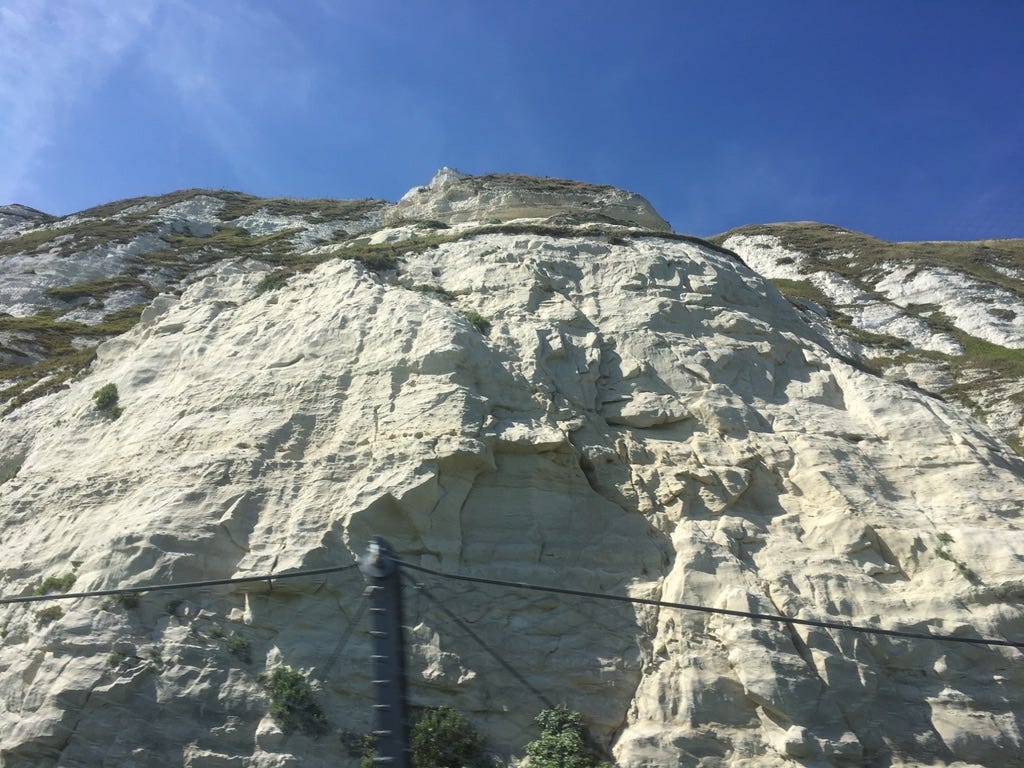
I am sure it’s even more difficult now. More barriers. More differences. More foreigners. More strangers. And yet, in the sixteenth century, Shakespeare mused on these things. Tell us about it, Sir Ian …
Dover the gateway to England. Never been there but it is far more important that George Villiers had been there once.